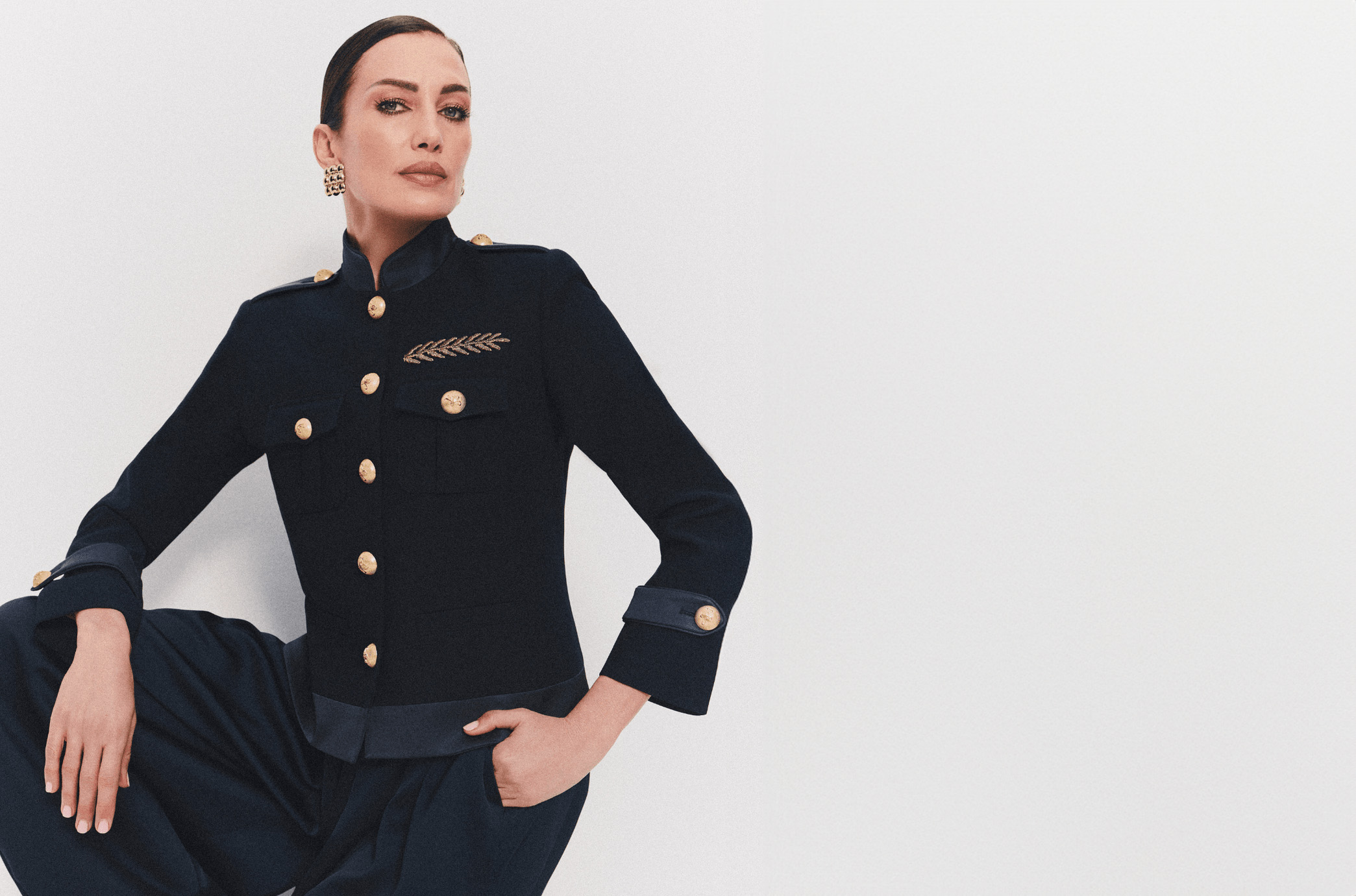
Winter dressing has a tendency to collapse into bulk. More layers, heavier fabrics, and a wardrobe that prioritizes warmth often produces an outfit that loses its shape entirely by the time every layer is in place. A blazer solves this problem more effectively than almost any other garment, but only when it is layered correctly. Layered incorrectly, a blazer in winter either fails to provide enough warmth or disappears beneath everything piled on top of it.
The solution is not a heavier blazer. It is a better understanding of what each layer is for and how the blazer fits into the sequence. Done correctly, a blazer in winter looks as considered as it does in any other season, while doing real work against the cold. Explore the full range of blazers for women at The Extreme Collection USA.
The Layering Sequence
Winter layering works in three parts: what sits against the body, the blazer itself, and what goes over the blazer when the temperature requires it. Each part has a distinct job. Confusing the jobs is what produces the bulky, unresolved silhouette that winter dressing often falls into.
The base layer provides warmth directly against the skin. The blazer provides structure and the visual definition of the outfit. The outer layer, when needed, provides additional protection against the elements without replacing the blazer’s role. When all three layers understand their job, the result is an outfit that stays warm without losing its shape at any point in the day.
The mistake most winter outfits make is asking the blazer to do the base layer’s job, or asking the base layer to do the blazer’s job. A thick sweater under a blazer fights the blazer’s shoulder. A blazer worn as the only layer in genuinely cold conditions leaves the wearer cold and the blazer looking like a poor substitute for a coat. Each piece needs to stay in its lane.
Yes. A blazer works well in winter when layered correctly: a fine knit or turtleneck underneath for warmth, the blazer itself for structure, and a coat or heavier outer layer on top when temperatures require it. The blazer’s role in winter is structural rather than insulating, which is why the layers around it matter more than the blazer’s own warmth.
The Base Layer
The base layer is where winter warmth should come from. A fine merino or cashmere turtleneck sits close to the body, traps heat efficiently, and adds minimal bulk beneath the blazer’s shoulder. This is the layer that does the actual work of keeping the wearer warm, which frees the blazer to do its job without compromise.
The fabric weight of the base layer matters more than its visual presence. A fine-gauge knit in a heavier fiber, such as merino wool or cashmere, provides significant warmth without the volume that a bulky cotton sweater introduces. This is the principle that allows a blazer to maintain its silhouette in winter the same way it does in any other season. The warmth comes from the fiber, not from the thickness of the fabric.
Color and tone matter here too, though less than fit. A base layer in a tone that complements the blazer, whether matching, contrasting, or in the same tonal family, allows the neckline to read as intentional when the blazer is worn open. A turtleneck visible at the collar is part of the outfit, not an undergarment, and should be treated accordingly.
The Blazer’s Role in Winter
The blazer’s job in winter is the same as its job in any season: structure, definition, and the visual signal of consideration. What changes is the fabric weight and tone that perform this job most effectively in cold conditions. A heavier wool blend, a structured crepe with more body, or a richly textured fabric all carry winter’s visual register better than the lighter fabrics that suit warmer months.
The blazer also needs to accommodate the base layer without losing its line. A blazer cut with enough room through the shoulder and chest to sit comfortably over a fine knit, without becoming tight or pulling at the button, performs through the full winter season. This is a fitting consideration worth checking before the cold arrives, not after.
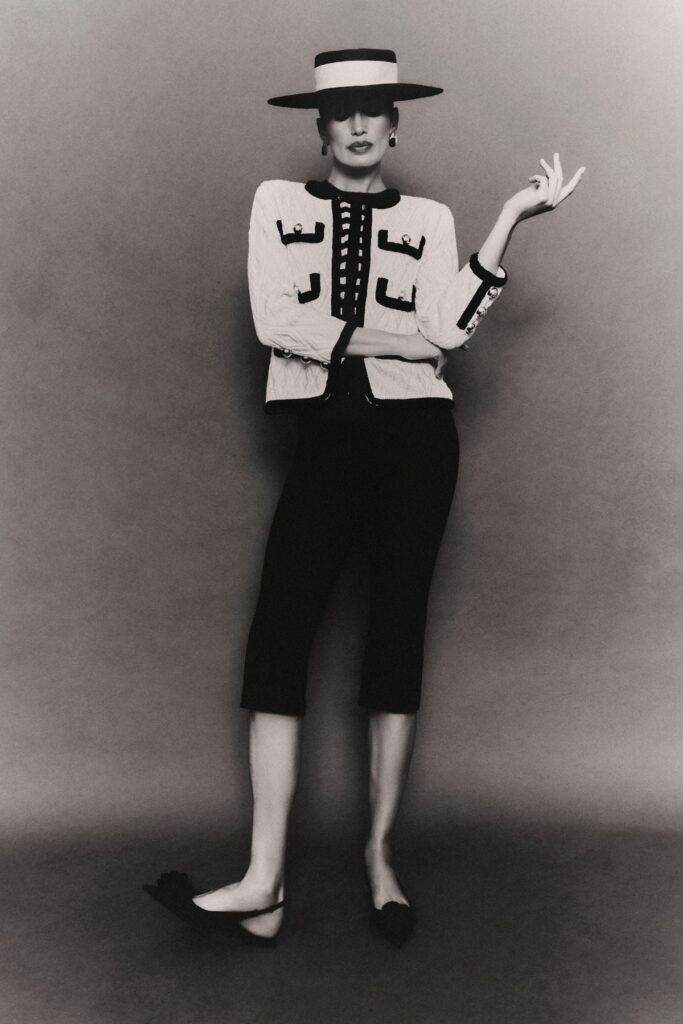
The jacket below illustrates the winter blazer at its most considered: a two-tone structured silhouette with enough weight and presence to anchor a winter outfit while remaining precise enough to layer cleanly over a fine knit beneath it.
The Military Blazer for Winter Authority
The military blazer’s defined shoulder and structured front make it particularly effective in winter, where the additional layers beneath it benefit from a silhouette strong enough to hold its line regardless of what sits underneath. The military construction does not lose its definition the way a softer blazer might when worn over a turtleneck and beneath a coat.
For winter professional contexts, a military blazer in a dark, rich tone reads as both seasonally appropriate and authoritative. The depth of color works with winter light in a way that lighter tones do not, and the structural precision of the silhouette communicates the same command in December that it does in any other month.
The jacket below brings ornamental detail into the winter register: a navy military silhouette with gold thread embroidery in a tone rich enough for the season’s palette. Worn over a fine black turtleneck and beneath a winter coat, it transitions from a professional morning to an evening occasion without requiring a change of outfit.
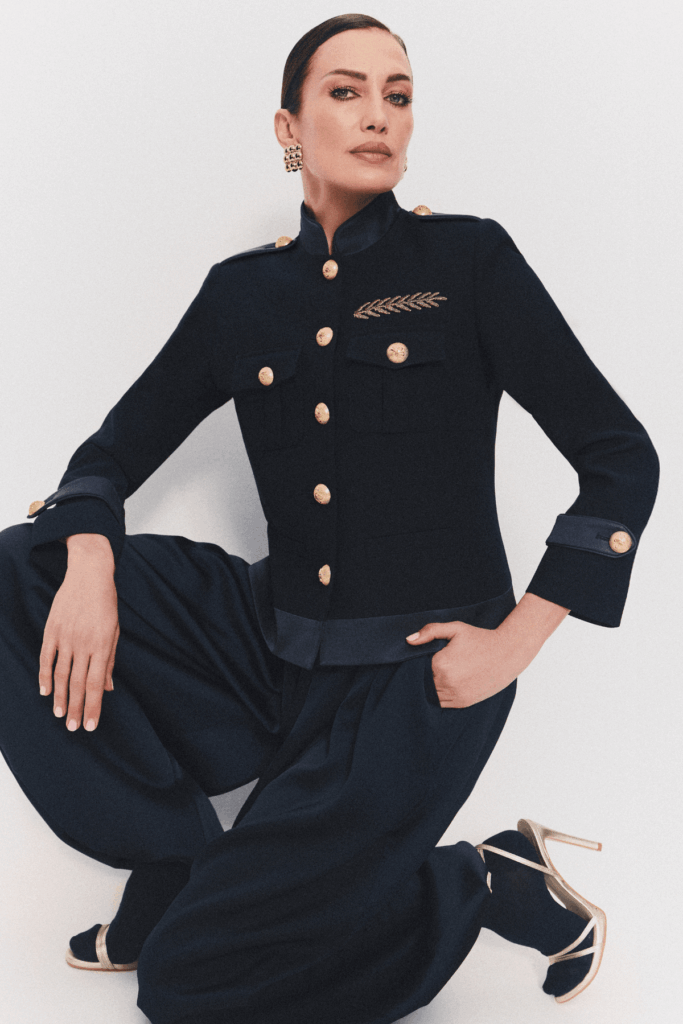
The full range of military blazers for women covers the silhouettes and tones best suited to winter’s professional and evening occasions.
A fine merino or cashmere turtleneck is the most effective base layer under a blazer in winter. It provides significant warmth without adding the bulk that a heavier sweater would introduce at the shoulder. The fine gauge allows the blazer to maintain its silhouette while the fiber does the work of keeping the wearer warm. A turtleneck visible at the collar should be treated as part of the outfit, in a tone that complements the blazer.
What Goes Over the Blazer
In genuinely cold conditions, the blazer needs an outer layer. This is where most winter outfits go wrong, either by skipping the outer layer entirely and leaving the wearer cold, or by choosing an outer layer that overwhelms the blazer’s silhouette and makes the layering beneath it pointless.
A wool coat in a complementary tone is the most reliable outer layer for a blazer. The coat should have enough room to accommodate the blazer without compressing it, and its own silhouette should not fight the blazer’s lines. A structured coat over a structured blazer reinforces the overall silhouette rather than competing with it. An oversized or slouchy coat over a precise blazer creates the visual confusion that undermines the whole outfit.
The relationship between the coat’s length and the blazer’s length also matters. A coat that ends significantly above the blazer’s hem creates an awkward visual break. A coat that falls at or below the blazer’s length, even if only by a small margin, keeps the silhouette resolved when both pieces are worn together.
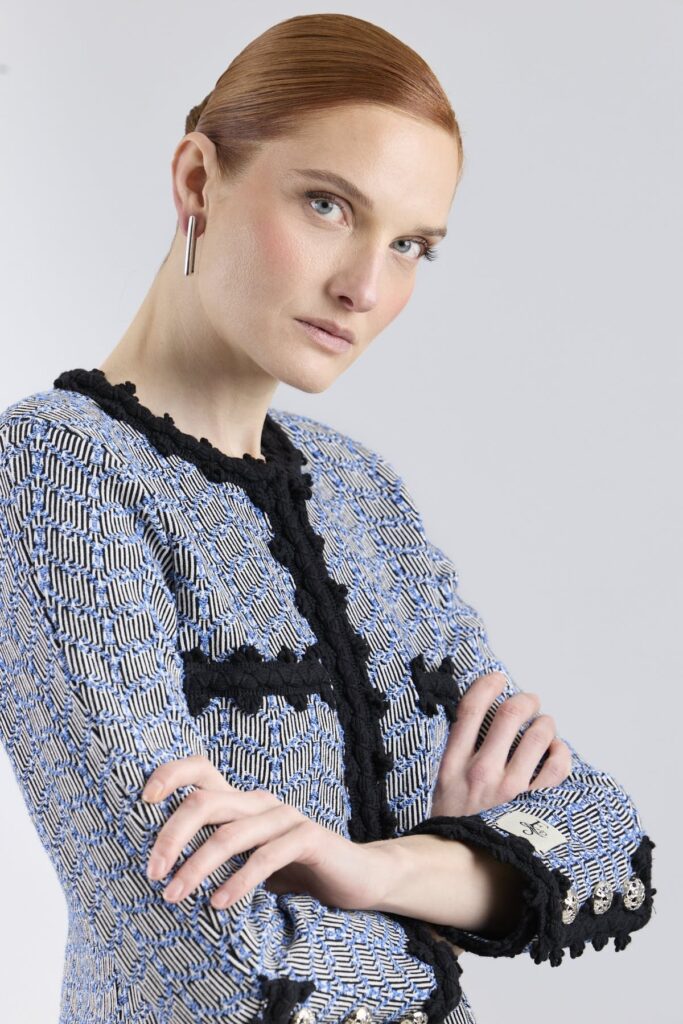
The jacket below works particularly well in this layered context: a richly textured construction with enough visual presence to hold its own beneath a winter coat while remaining the piece that defines the outfit once the coat comes off indoors.
Fabric Choices for Winter
The fabrics that perform best for winter blazers share certain qualities: enough weight to hold their shape against the additional layers beneath them, enough density to provide a degree of insulation on their own, and a surface quality that reads as appropriate for the season’s light and palette.
Wool blends and heavier crepes are the foundation of a winter blazer wardrobe. They hold their structure regardless of what is layered beneath them and they carry the deeper tones that winter calls for without looking flat. Velvet, which earns its place in fall, continues to perform in winter for evening occasions, where its surface catches artificial light in a way that daytime fabrics do not.
What does not perform well in winter is anything too lightweight or too loosely constructed. A linen blazer, however well made, was not built for this season’s layering demands. The fabric that works beautifully in July does not hold up under a turtleneck and a coat in January. Seasonal fabric rotation is not a styling preference. It is a practical requirement.
The jacket below brings a raw, textured construction to the winter wardrobe: a fabric with enough body and depth to anchor a layered outfit while reading as considered on its own once the outer layers come off.
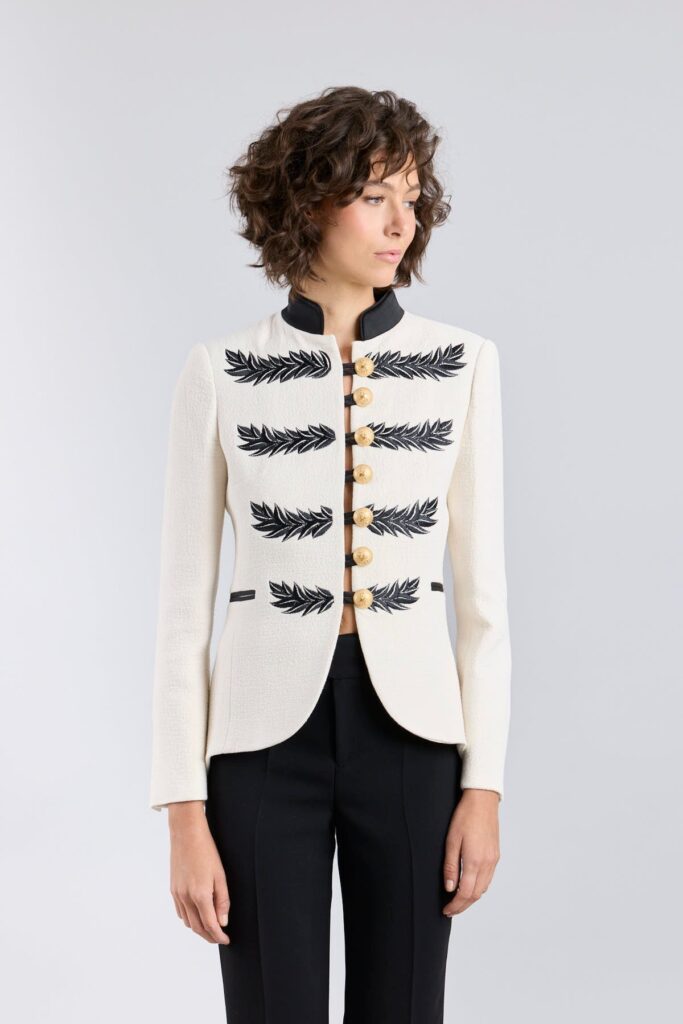
Wool blends, heavier crepes, and richly textured constructions perform best for blazers in winter. These fabrics hold their shape against additional layers, provide a degree of insulation on their own, and carry the deeper tones the season calls for. Velvet continues to work for winter evening occasions. Lightweight fabrics such as linen, which suit summer, do not hold up under winter layering and should be set aside until the season changes.
From Outdoors to Indoors
One of the underrated advantages of layering a blazer correctly in winter is what happens when the outer layer comes off. A coat removed at the office, a restaurant, or an event reveals the blazer as the defining piece of the outfit. If the layering has been done correctly, the transition from outdoor to indoor requires no adjustment. The outfit that worked against the cold is the same outfit that works in the room.
This is the test of whether a winter layering strategy has succeeded. An outfit that looks complete only with the coat on, and incomplete or unbalanced once it comes off, has not solved the layering problem. An outfit where the blazer and its base layer read as fully resolved on their own, with the coat simply added for the journey between locations, has solved it correctly.
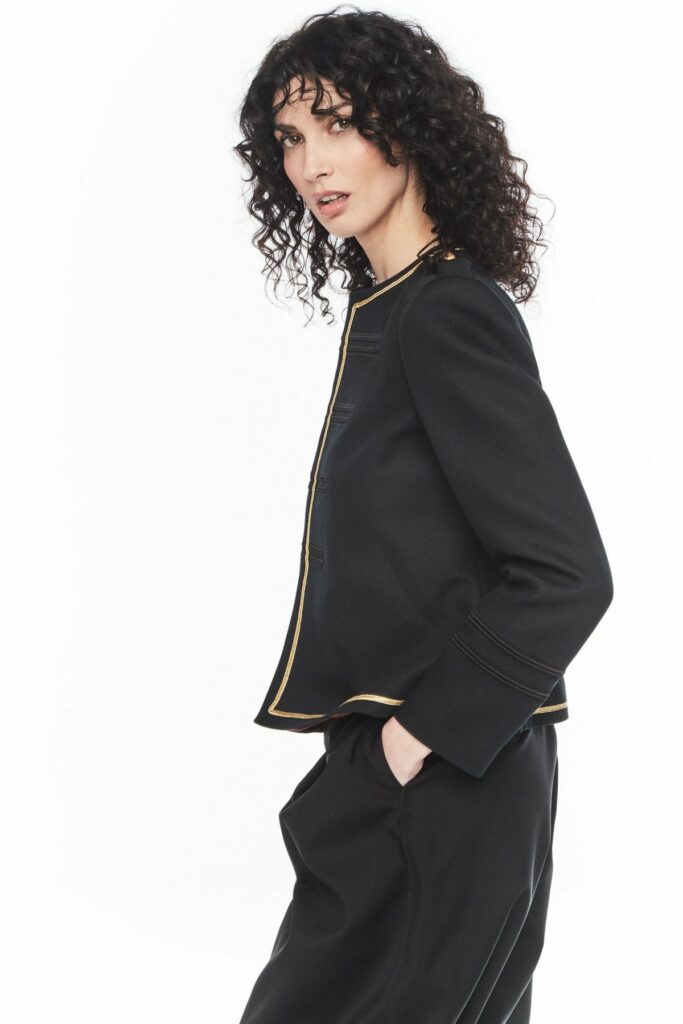
The jacket below performs exactly this function: a precise military silhouette that holds its authority whether worn beneath a coat on the street or as the defining piece of an indoor professional or social occasion.
Building a Winter Layering Wardrobe
A winter layering wardrobe built around the blazer needs three components working together: a small collection of fine-gauge knits in versatile tones for the base layer, one or two blazers in winter-appropriate fabrics and deeper tones, and a coat that complements the blazers without overwhelming them.
The investment priority should follow this order. The blazer is the piece that defines the outfit and therefore the piece worth the greatest consideration in construction and fabric. The base layers are relatively interchangeable and can be built up over time. The coat needs to work with the blazers already chosen, which means it often makes sense to select it last, once the blazer wardrobe is established.
For guidance on choosing the right blazer silhouette and fabric for your body type and the occasions winter brings, our guide to choosing the perfect blazer for your body type and occasion covers the decisions in detail. For the broader seasonal logic that connects fall and winter dressing, our post on why fall is blazer season covers the palette and fabric transitions that carry into winter.
The full collection of blazers for women and military blazers is available at The Extreme Collection USA, each piece made in Spain and built to perform across every layer winter requires.