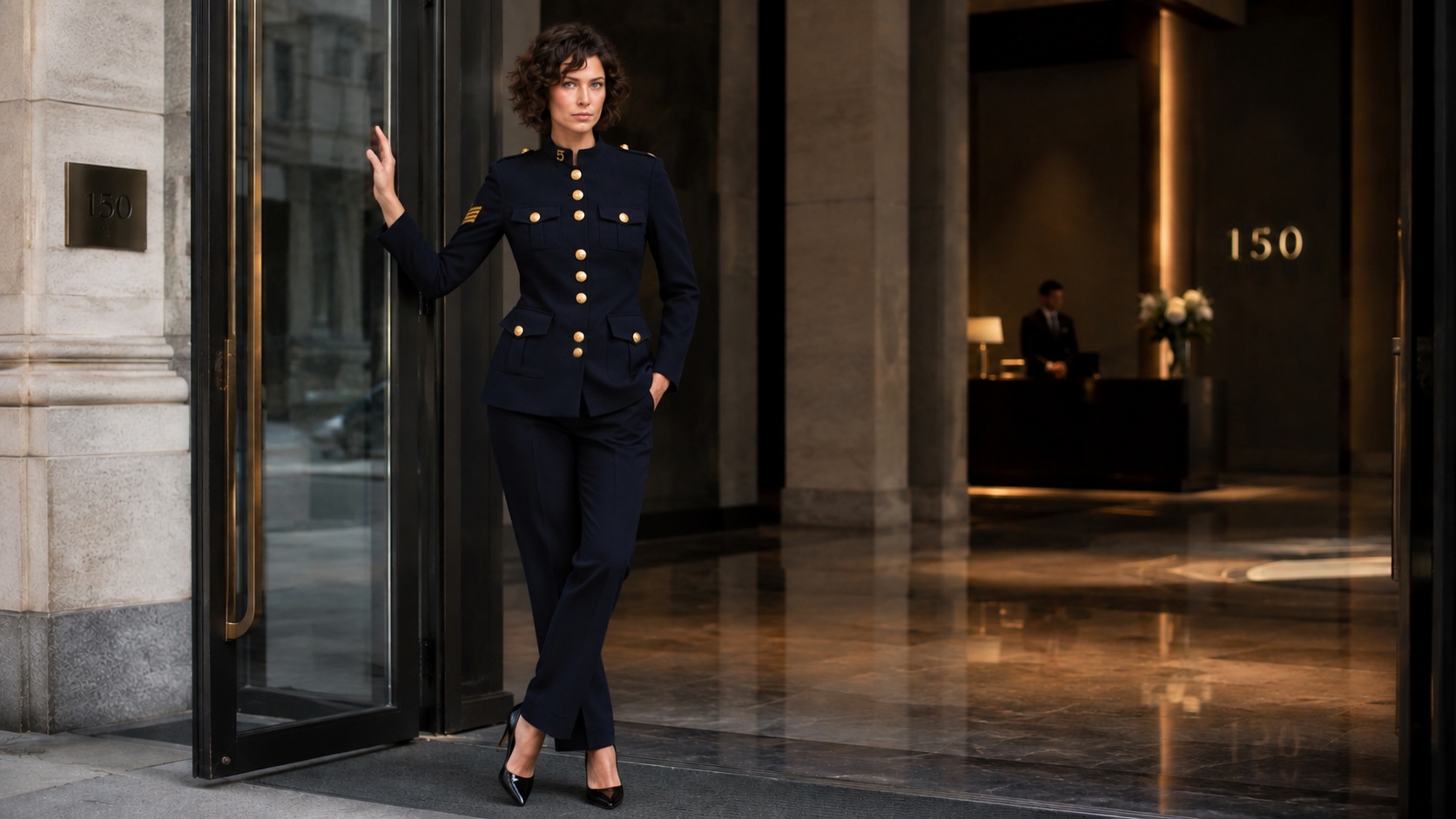
You have approximately seven seconds. That is the window of time research consistently identifies as the period in which a first impression forms. In seven seconds, before you have introduced yourself, before you have demonstrated your knowledge, your warmth, or your capability, the person across from you has already formed a judgment. Not a final one. But a foundational one that will shape how they receive everything that follows.
This is not a reason for anxiety. It is a reason for intention. The first impression is not something that happens to you. It is something you can choose to shape. And the most direct lever available for shaping it is the one most people underestimate: what you wear when you walk into the room. Explore the full range of blazers for women at The Extreme Collection USA.
What Research Actually Says
The psychology of first impressions is well documented. Within seconds of meeting someone, observers make judgments about trustworthiness, competence, warmth, and status. These judgments are formed primarily from visual information: appearance, posture, and the signals that clothing sends before language begins.
The clothing signals are not superficial. They communicate something real about the person wearing them: the care they take, the attention they pay, the intention behind the choices they make. A woman who dresses with precision communicates that she brings precision to everything. A woman who dresses with confidence communicates that she has something to be confident about. These are not logical deductions the observer makes consciously. They are immediate, involuntary responses to visual information.
The implication is straightforward. Dressing with intention is not vanity. It is communication. And like every other form of communication, it rewards the people who take it seriously.
Yes. Research in social psychology consistently shows that clothing communicates competence, status, warmth, and trustworthiness within seconds of a first encounter, before any verbal exchange has taken place. These judgments are not conscious deductions but involuntary responses to visual information. Dressing with intention gives the wearer direct control over the signals that shape how others receive them from the first moment of contact.
The Difference Between Dressing and Dressing with Intention
Most people dress. Fewer people dress with intention. The difference is not about spending more or owning more. It is about understanding what each garment communicates and making choices accordingly.
Dressing is reactive. You open the wardrobe, you find something that fits the weather and the occasion, and you leave. The first impression you make is whatever those choices happen to produce. Sometimes it is excellent. Sometimes it is not. It depends on what was available, what was clean, and what happened to work together on a particular morning.
Dressing with intention is different. It starts from a question: what do I want to communicate today, and what do I want the person I am meeting to understand about me before I speak? The answers to those questions shape the choices. And the choices shape the first impression with consistency rather than chance.
The blazer is the most reliable tool for intentional dressing because its signal is the clearest. A woman in a well-made blazer communicates consideration, precision, and authority before she has done anything else. The blazer does not create those qualities. It amplifies them. And it does so in seven seconds or less.
The Professional First Impression
In a professional context, the first impression determines the terms on which every subsequent interaction happens. A woman who enters a room and immediately reads as authoritative and competent does not have to establish those qualities through her words and actions. The room already assumes them. She is starting from a position of credibility rather than working toward one.
This is not a trivial advantage. The energy that goes into establishing credibility after a weak first impression is energy that could be spent on the actual substance of the meeting. A strong first impression clears the ground. It creates the conditions in which the work can happen without distraction.
The military blazer makes the strongest professional first impression available in the blazer category. Its defined shoulder and structured front communicate discipline and precision before the wearer has reached the center of the room. These are not decorative signals. They derive from garments designed to communicate rank and authority, and they carry that weight into every professional context they enter.
The jacket below is the professional first impression at its most direct: navy crepe construction with a mandarin collar and the precise button placement that defines the military register. It does not ask to be taken seriously. It assumes it will be.
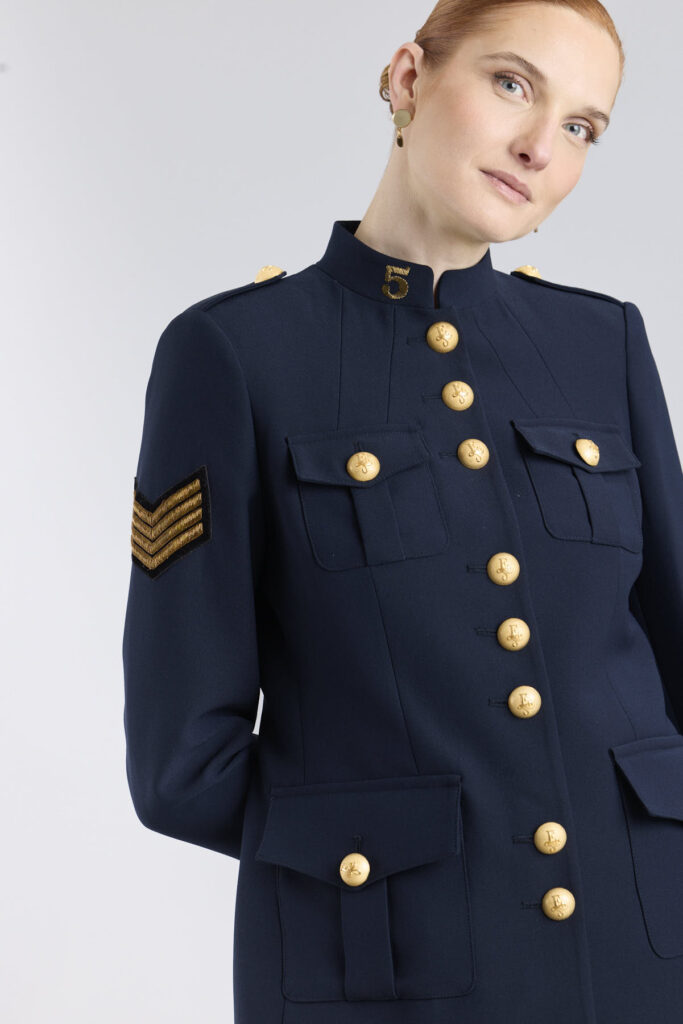
A structured blazer in a neutral or authoritative tone makes the strongest professional first impression. The blazer communicates competence, consideration, and precision before any verbal exchange has taken place. A military blazer is particularly effective in high-stakes professional contexts because its defined shoulder and structured construction communicate authority through architecture rather than decoration. Keep everything beneath the blazer simple so the jacket’s signal reads without interference.
The Social First Impression
Social first impressions operate differently from professional ones. The signals that communicate authority in a boardroom communicate rigidity at a dinner party. The social first impression calls for something that reads as considered and confident without imposing the formality of the professional register. The goal is to communicate taste, ease, and the particular kind of confidence that comes from knowing exactly who you are and choosing clothing that ensures the world receives you that way.
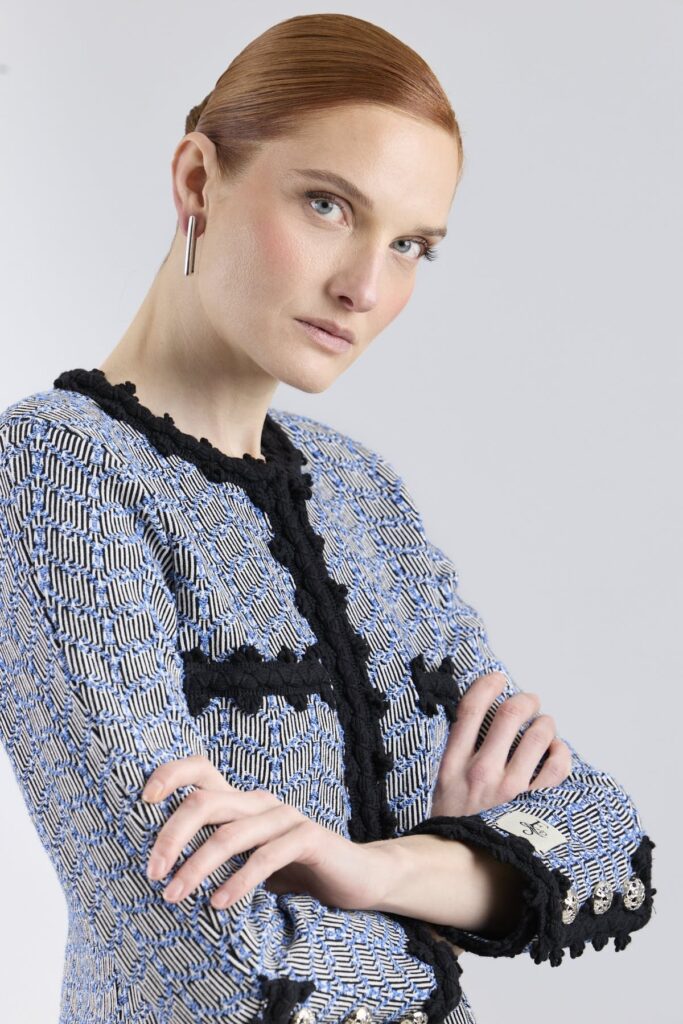
A blazer in a distinctive color or fabric makes this social first impression more effectively than anything else in the wardrobe. The structure communicates consideration. The color or fabric communicates personality. Together they produce an impression of a woman who dressed deliberately for this specific occasion, which is a more interesting and more memorable signal than either element produces alone.
The jacket below makes this social first impression at its most confident: a metallic blue construction with the kind of surface quality that catches the light and communicates both elegance and individuality. At a dinner, a gallery opening, or any social occasion where the first impression sets the terms for every conversation that follows, this piece ensures those terms are exactly the ones the wearer intends.
The Evening First Impression
The evening first impression is the one most people neglect in favor of the dress. A dress makes an impression, but it is rarely as distinctive or as memorable as a blazer in an evening context, because a blazer at an evening occasion communicates something a dress does not: that the woman wearing it made a specific and considered choice rather than reaching for the obvious solution.
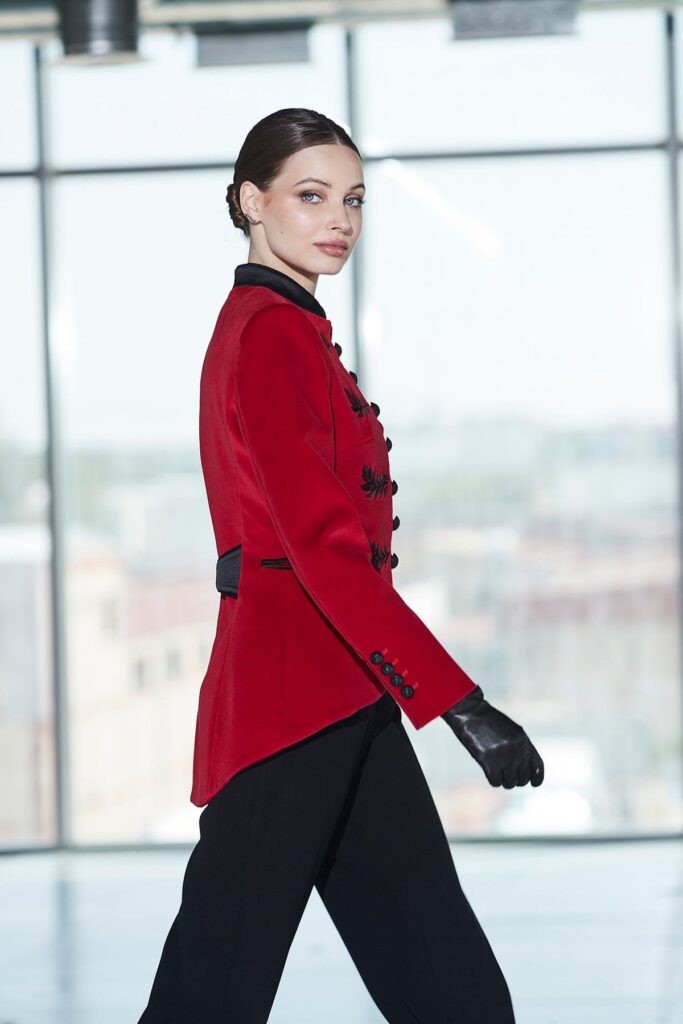
An evening blazer in a rich fabric, whether velvet, a deeply saturated color, or an embellished surface, reads as both authoritative and celebratory. It communicates that the wearer is dressed for the occasion without being dressed by it. She has not allowed the occasion to dictate her wardrobe. She has brought her wardrobe to the occasion, which is a fundamentally different posture and one that reads clearly in the first seven seconds.
The jacket below makes the evening first impression the most memorable one in the room: a rich velvet construction in a tone that shifts between depth and luminosity under evening lighting. The surface catches light the way no other fabric does, which means the first impression it makes is also the one that stays longest in the room’s memory.
Why the Blazer Makes Every First Impression Better
The blazer’s advantage in the first impression is structural rather than decorative. Other garments can be beautiful, expressive, or striking. The blazer combines those qualities with the one signal that most other garments cannot produce with equal reliability: the signal of intention.
A woman in a blazer looks like she made a decision. She looks like she thought about where she was going, who she was going to meet, and what she wanted them to understand about her before she arrived. That deliberateness reads immediately and it shapes every subsequent impression the room forms of her.
The clothing did not create that quality. It amplified what was already there. And in seven seconds, amplification is everything.
The jacket below is the statement piece for the first impression that requires no explanation: a hand-studded tailored blazer that communicates both artisanal quality and complete confidence. It is not a piece that asks permission. It is a piece that walks into a room and changes it.
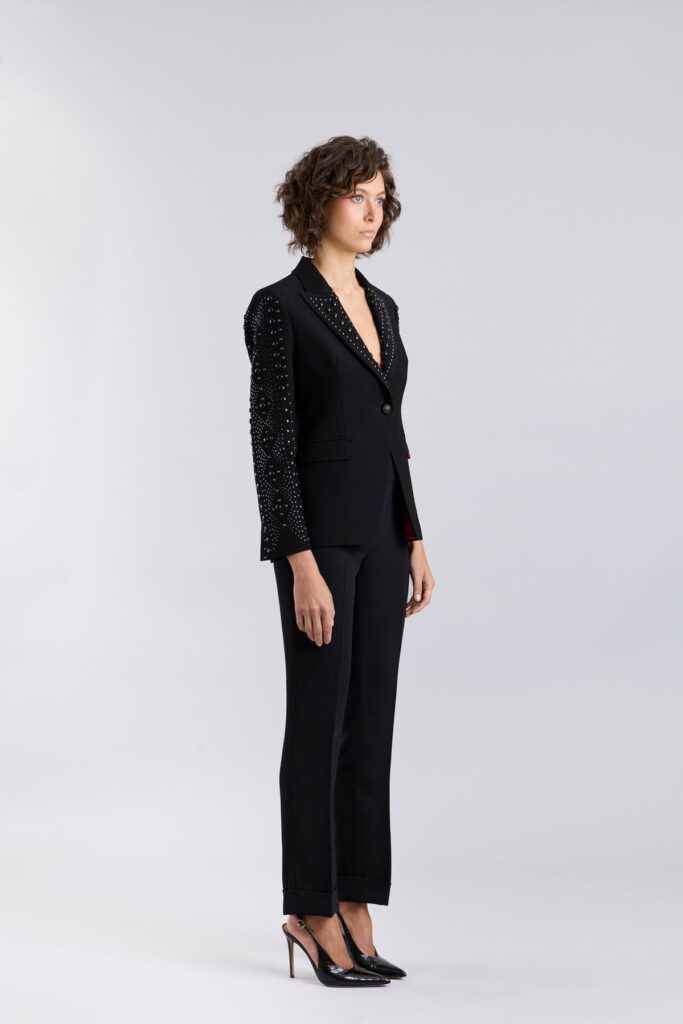
Clothing shapes the signals that others receive before any verbal communication begins. A well-made blazer communicates competence, consideration, and intention in the first seconds of an encounter, creating the conditions for every subsequent interaction to happen from a position of credibility rather than uncertainty. The clothing does not create these qualities. It amplifies them. Choosing a blazer that communicates something specific about who you are and what you bring to a room is the most direct available tool for controlling how that room receives you.
The Investment in the First Impression
The argument for investing in a well-made blazer is often made in terms of cost per wear, versatility, and longevity. These are real arguments and they are correct. But the most important argument is simpler than any of them: a well-made blazer makes a better first impression than a cheaper one. The construction shows. The fabric reads differently. The shoulder holds in a way that communicates quality without announcing it. The person across the room does not know that the blazer was made in Spain over thirty hours by artisan hands. They simply know that the woman wearing it looks like someone who takes things seriously.
That impression is worth more than any other return on the investment. It compounds across every first meeting, every new room, every occasion where the first seven seconds determine the terms of what follows.
For guidance on choosing the blazer that makes the right first impression for the specific contexts you navigate most regularly, our guide to choosing the perfect blazer for your body type and occasion covers the decisions in full. For the construction standards that produce the impression described in this post, our editorial on what makes European tailoring different explains what to look for and why it matters. The full collection of blazers for women and military blazers is available at The Extreme Collection USA, each piece made in Spain and built to make the first impression count.