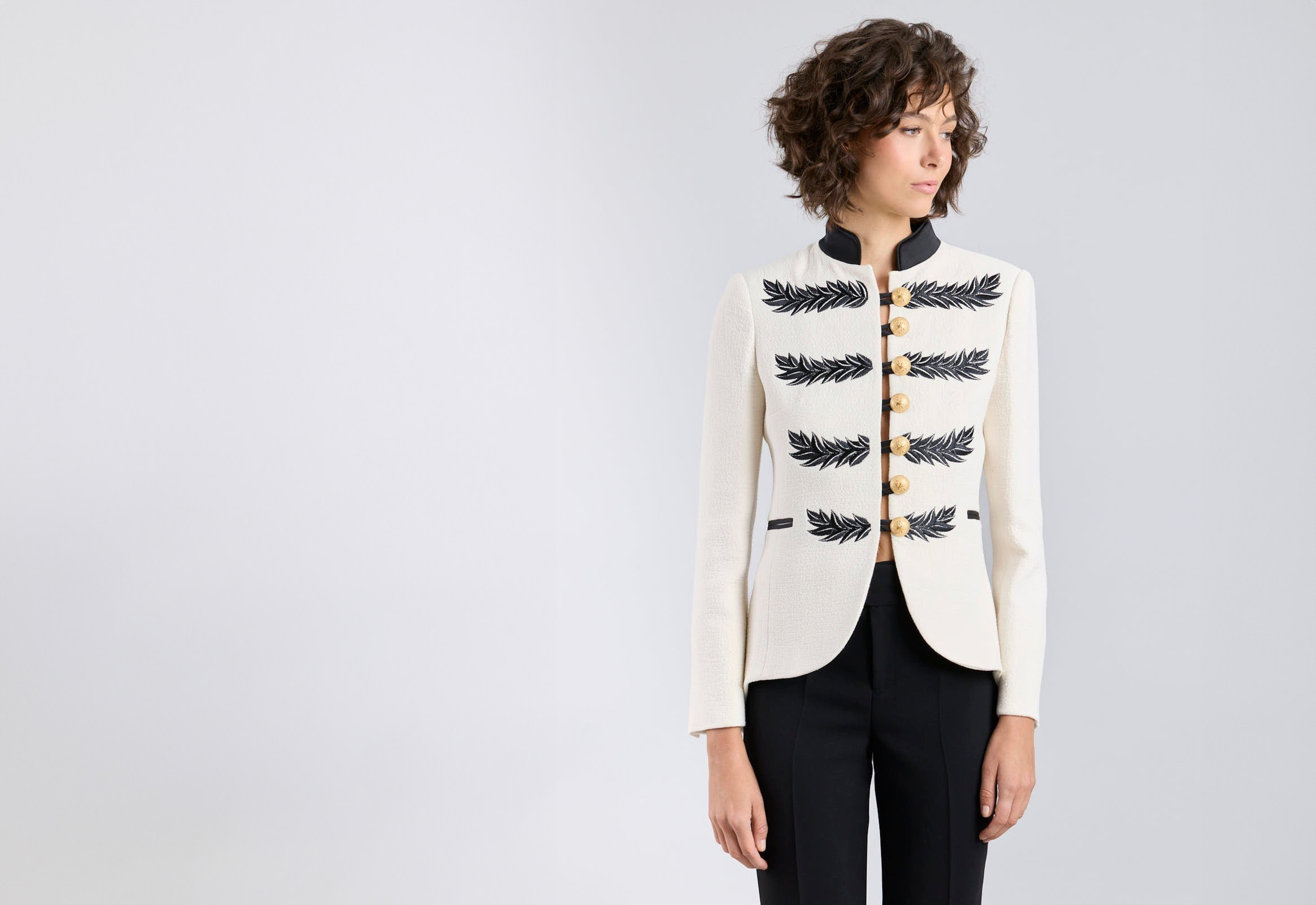
European tailoring has a reputation that travels well beyond Europe. Women who have never set foot in a Spanish atelier or a Milanese workshop recognize something in a well-made European garment the moment they hold it. The weight feels different. The shoulder sits differently. The way the jacket moves when worn is different from anything produced at volume. Understanding why that is changes how you think about every jacket you buy.
The answer is not simply tradition, though tradition matters. It is a specific set of construction decisions made at every stage of production: decisions about materials, about how a garment is built from the inside out, about the time required to do certain things correctly, and about what cannot be shortcut without compromising the result. Explore the full range of blazers for women at The Extreme Collection USA.
The Interior Is Where the Difference Begins
Most women evaluate a jacket from the outside. European tailors build one from the inside. The interior construction of a garment determines everything about how it behaves: how it holds its shape, how it responds to movement, how it sits on the shoulder, and how it looks after a full day of wear rather than just in the first five minutes.
The critical distinction is between canvas construction and fusing. A traditionally tailored European blazer uses a canvas interlining, a layer of woven fabric stitched between the outer shell and the lining, that gives the garment its structure. This canvas moves with the wearer, softens over time to conform to the body, and holds the lapel and front in a way that looks natural rather than stiff. It is invisible but it is everything.
Mass-produced garments use a fused interlining instead: a layer of material bonded to the outer fabric with heat and adhesive. It produces the appearance of structure without the reality of it. Fused blazers look correct on a hanger. They begin to bubble, separate, and lose their shape after repeated wear and cleaning. The construction failure that makes a cheap blazer look cheap after six months is almost always a fusing problem.
European tailoring does not use fusing where canvas will do the job better. The choice costs more time and more money. It also produces a garment that performs across years rather than months.
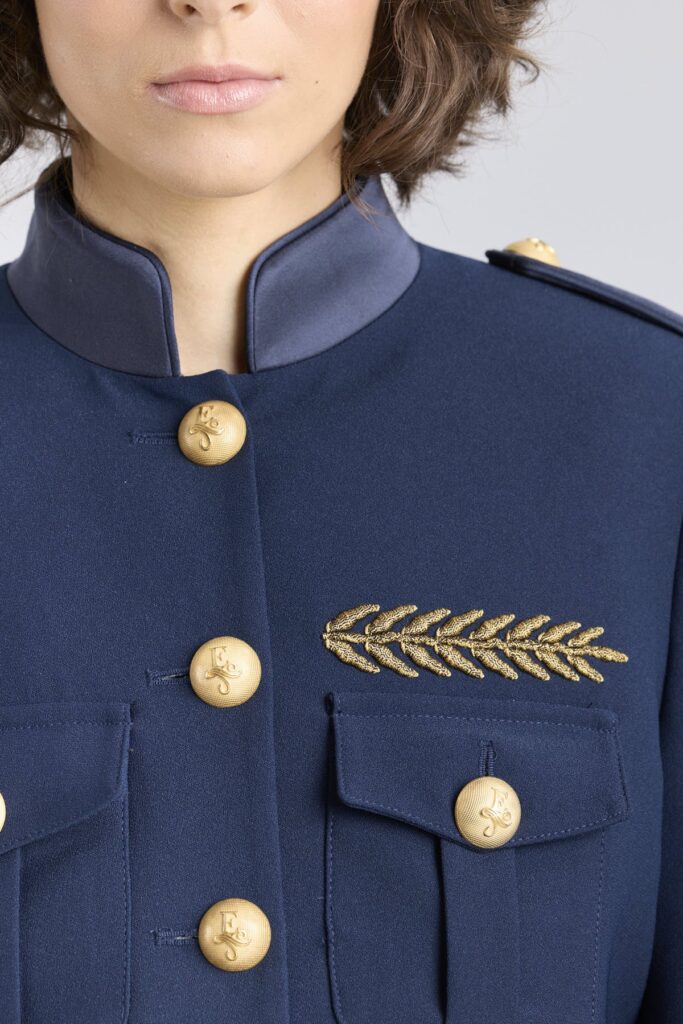
The primary difference lies in the interior construction of the garment. European tailoring uses canvas interlinings that give structure through stitched layers of woven fabric, producing a blazer that holds its shape, moves naturally with the body, and improves with wear. Fast fashion uses fused interlinings bonded with heat and adhesive, which produce the appearance of structure initially but bubble, separate, and deteriorate after repeated wear and cleaning. The difference is invisible when you first buy a jacket and completely visible after six months of wearing it.
The Shoulder: Where European Tailoring Is Most Visible
The shoulder of a well-made European blazer is the detail that most clearly separates it from everything produced at speed. Getting the shoulder right requires precision at the cutting stage, care at the construction stage, and time at the finishing stage that volume production simply cannot accommodate.
A correctly tailored shoulder sits exactly at the edge of the natural shoulder, not a centimeter beyond it, not a centimeter short. The seam falls cleanly. The sleeve hangs straight. The fabric lies flat without pulling, puckering, or creating the horizontal drag lines that appear on jackets where the shoulder is even slightly off. When the shoulder is right, the entire garment reads as right without the wearer needing to understand why.
The sleeve head, the curved top of the sleeve where it meets the shoulder, requires hand sewing to achieve a smooth, rounded attachment in the European tradition. Machine-sewn sleeve heads can look acceptable on the outside and almost never achieve the same clean, rounded line. The difference is visible from across a room to anyone who knows what they are looking at.
Fabric Selection as a Technical Decision
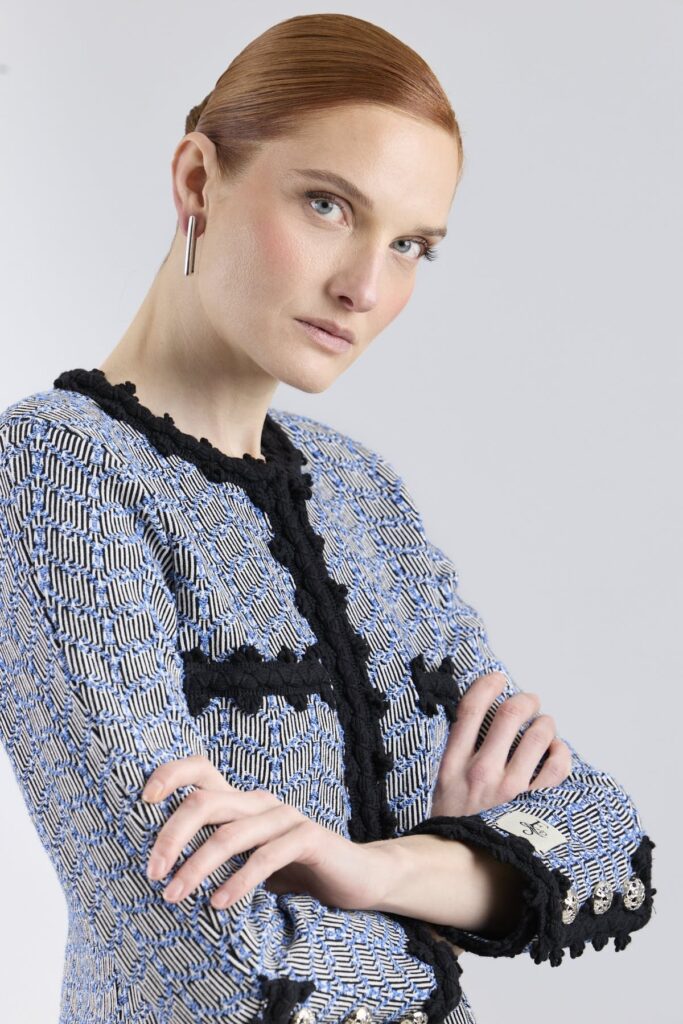
European tailors do not source fabric generically and then design around it. The fabric is part of the design from the beginning. The choice of material determines how a pattern will be cut, how the garment will be constructed, what finishing techniques are appropriate, and ultimately how the finished piece will behave on the body.
This approach produces a specific relationship between fabric and silhouette. A linen blazer and a crepe blazer require entirely different construction approaches because their fabrics behave differently under tension, around curves, and at seam intersections. A tailor who understands linen will cut differently, sew differently, and press differently than one who works primarily in wool. European ateliers develop this knowledge over generations and across a deep range of fabrics.
The result is a garment where the fabric and the construction enhance each other rather than work against each other. The texture reads correctly. The color holds. The drape is what the designer intended rather than what the fabric defaulted to under inadequate handling.
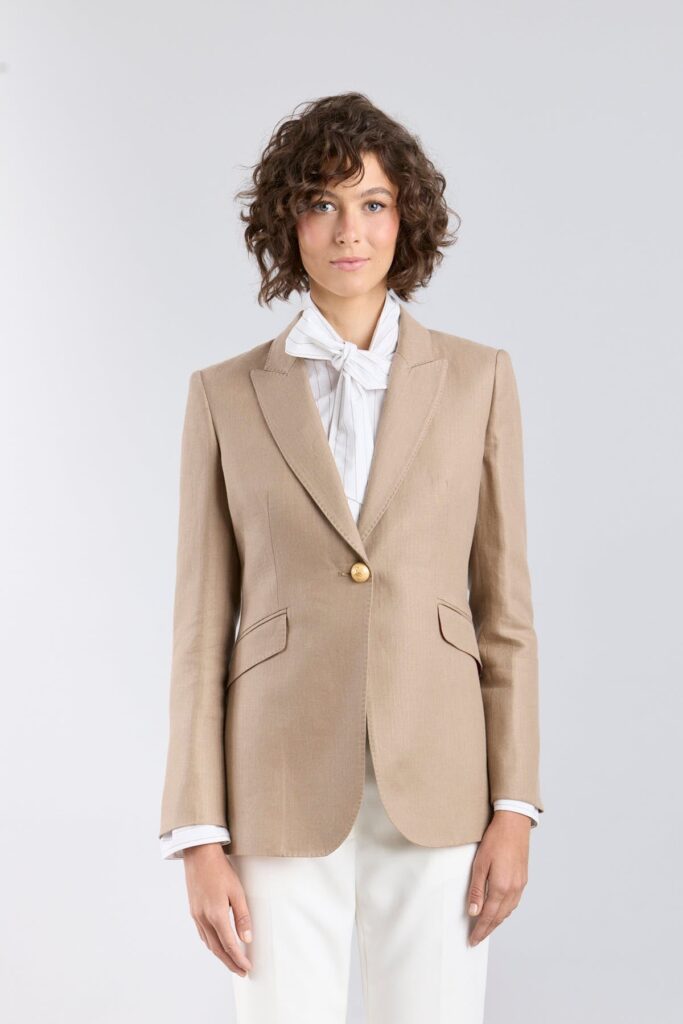
European blazers are cut and constructed with a deeper understanding of how specific fabrics behave under different conditions. The shoulder is set by hand to the exact edge of the natural shoulder. The canvas interlining is shaped to follow the body’s contours rather than imposing a generic silhouette onto it. The result is a blazer that appears to be made for the person wearing it, which is the effect that precise tailoring produces even in a ready-to-wear garment.
The Spanish Tailoring Tradition Specifically
Within European tailoring, Spain occupies a distinct position. Italian tailoring is celebrated for softness and drape. British tailoring is known for structure and formality. Spanish tailoring combines both: the precision and architectural clarity of structured construction with a Mediterranean sensibility for color, surface, and warmth that neither the Italian nor the British tradition produces in the same way.
Spanish ateliers have historically produced garments for a climate and a culture that demands both elegance and practicality. The garments need to hold their structure in warm weather. They need to read as professional in formal contexts and as refined in social ones. They need to accommodate a range of body types without losing their integrity. These requirements have produced a tailoring tradition that is technically demanding and aesthetically distinctive.
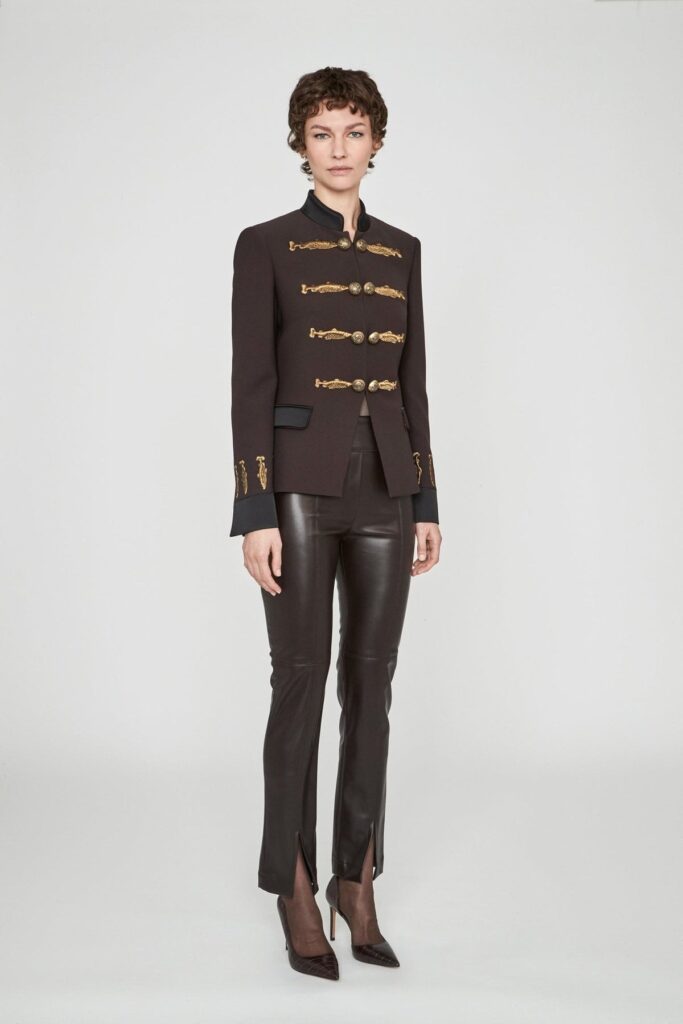
The decorative elements that characterize much Spanish tailoring: embroidery, ornamental buttons, contrast trim, surface detailing, are not additions to a structure. They are integrated into it. The embroidery is placed where the canvas allows it to sit flat. The buttons are chosen for their weight relative to the fabric. The trim follows the seam lines rather than crossing them. Everything is considered in relation to everything else.
What Thirty Hours of Work Produces
Each style in The Extreme Collection USA requires a minimum of thirty working hours to complete. That figure is not a marketing claim. It is the actual time required to produce the garments to the standard they meet: the cutting, the interlining work, the hand finishing, the pressing at each stage of construction, the quality checks, and the final inspection.
Thirty hours of artisan time per garment is incompatible with the economics of mass production. It is only possible in a limited edition model where each piece is produced in small quantities, where the cost of the time is distributed across a price point that reflects the actual investment in the garment, and where the workshop operates on a standard of craft rather than a standard of throughput.
What those thirty hours produce is a garment that holds its construction across years of real wear. The shoulder that sits correctly on the day you buy it sits correctly two years later. The lapel that lies flat when the jacket is new lies flat when it is your most-worn piece. The fabric that reads beautifully in the first season reads beautifully in the fifth. This is what the time investment produces. Not novelty. Longevity.
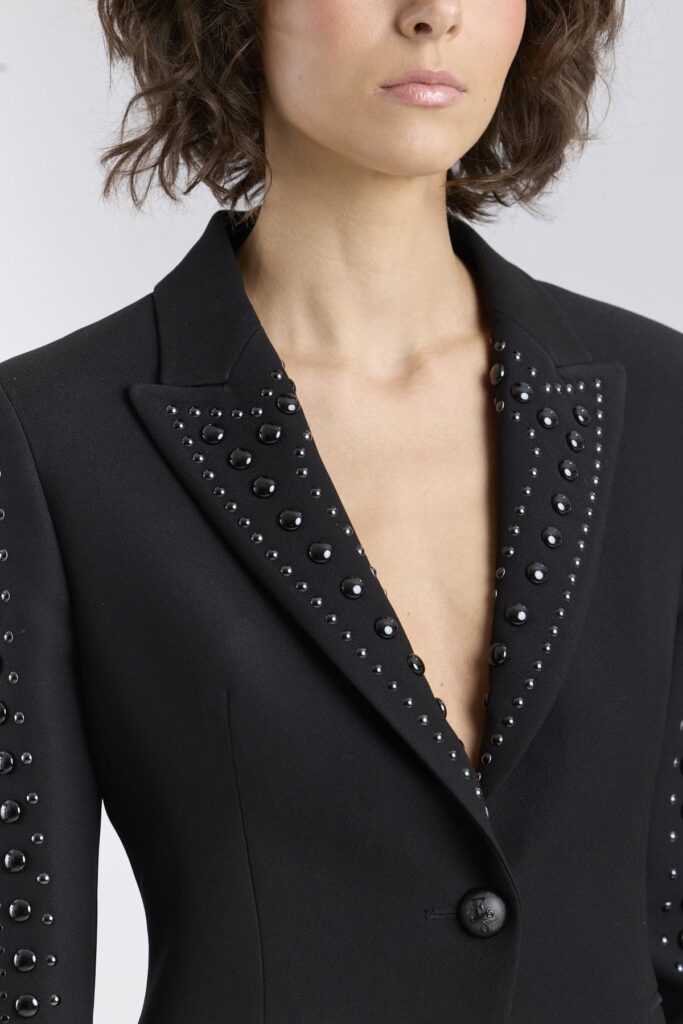
A European blazer made with canvas interlining, hand finishing, and quality fabric should perform across many years of regular wear without losing its structure, silhouette, or professional appearance. The construction methods used in European ateliers are specifically designed for longevity rather than novelty. A well-chosen blazer from a Spanish atelier is not a seasonal purchase. It is a long-term acquisition whose cost per wear decreases significantly over time compared to cheaper alternatives purchased and replaced repeatedly.
How to Recognize European Tailoring Quality
The quality difference between a European tailored blazer and a mass-produced alternative is visible and tactile if you know where to look. These are the indicators that separate genuinely well-made garments from those that merely resemble them.
Pick up the jacket and hold it by the collar. The weight should feel substantial and even. A well-made blazer has mass that comes from the canvas interlining and quality fabric rather than padding. If the jacket feels light and insubstantial, the construction is likely fused and minimal.
Roll the lapel between your fingers. It should feel soft and slightly springy, returning to its natural roll when released. This is the canvas working correctly. A fused lapel feels stiffer and more plastic, without the natural give that canvas produces.
Check the button holes. Hand-worked button holes have a slightly irregular, tactile quality that machine-made ones do not. The stitching is tighter and the edges are cleaner. This is one of the most reliable indicators of the overall finishing standard of a garment.
Look at the lining at the hem. A quality lining is attached with a floating hem, a few stitches that allow the lining to move independently of the outer fabric. A fused or poorly finished lining is tacked directly to the hem, which causes puckering and restricts the garment’s natural movement.

European Tailoring in an American Wardrobe
The qualities that define European tailoring translate directly into value for any woman building a serious professional wardrobe, regardless of where she lives or works. The construction standard that makes a Spanish blazer perform across a European professional season performs equally well across an American one. The shoulder that sits correctly in Madrid sits correctly in Los Angeles.
What changes is the context in which these garments operate. The American professional wardrobe tends toward more variety and less consistency. The European garments in that wardrobe become the anchors: the pieces that reliably elevate everything around them, that require no management, and that improve the overall standard of the wardrobe simply by being present in it.
This is the proposition The Extreme Collection USA brings to the American market. Not European fashion as a cultural import but European construction standards applied to a collection designed for women who want their clothing to perform rather than simply to appear. The difference between the two is exactly what those thirty hours of artisan work produce.
For guidance on choosing the right piece from the collection, our guide to choosing the perfect blazer for your body type and occasion covers silhouette, proportion, and fit in detail. The military blazers collection represents the most architecturally precise expression of European tailoring in the collection, explored further in our editorial on military blazers for women: structure, purpose and modern refinement. The full blazers collection is available at The Extreme Collection USA, each piece made in Spain to the standard this post has described.