The difference between a sport coat, a blazer, and a suit jacket gets answered constantly for men and almost never for women. Most content on this topic takes a menswear perspective. That leaves women building serious wardrobes without a clear reference point for decisions that matter.
The distinctions are real and practical. Each garment has a specific origin, construction logic, and appropriate context. Knowing which one belongs in your wardrobe is not a minor detail. It shapes how you dress across every professional and social occasion you encounter. Explore the full range of blazers for women at The Extreme Collection USA.
What Is a Blazer?
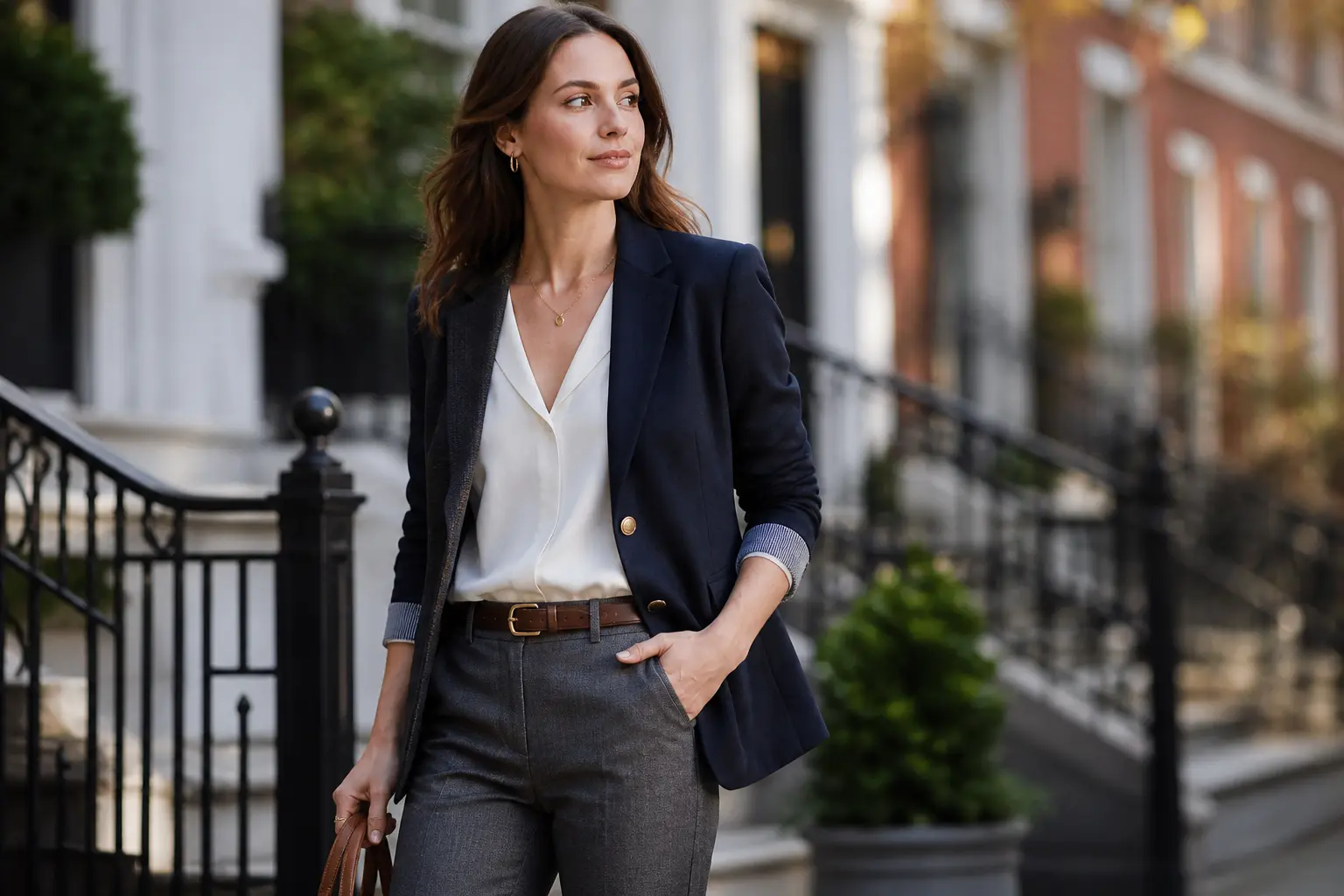
A blazer is a structured jacket that stands independently of a matching trouser or skirt. It is not part of a suit. It requires no coordinating bottom made from the same fabric. Its job is to elevate whatever surrounds it: tailored trousers, a dress, denim, or a simple skirt.
The blazer anchors an outfit without demanding that the outfit build around it. It introduces structure, presence, and a degree of formality that no other single garment achieves with the same consistency.
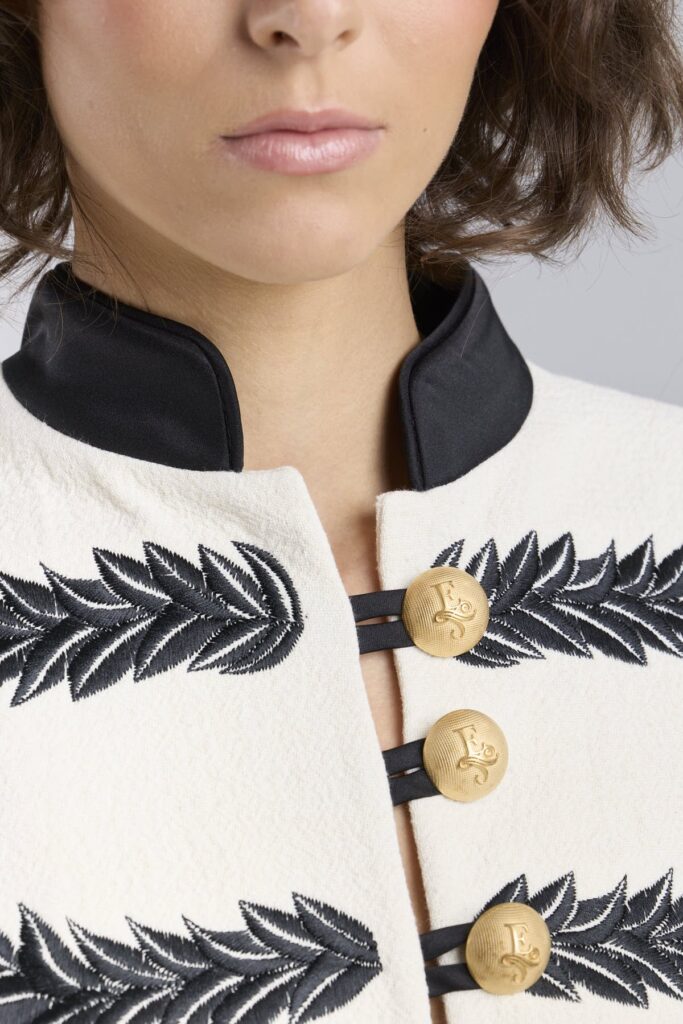
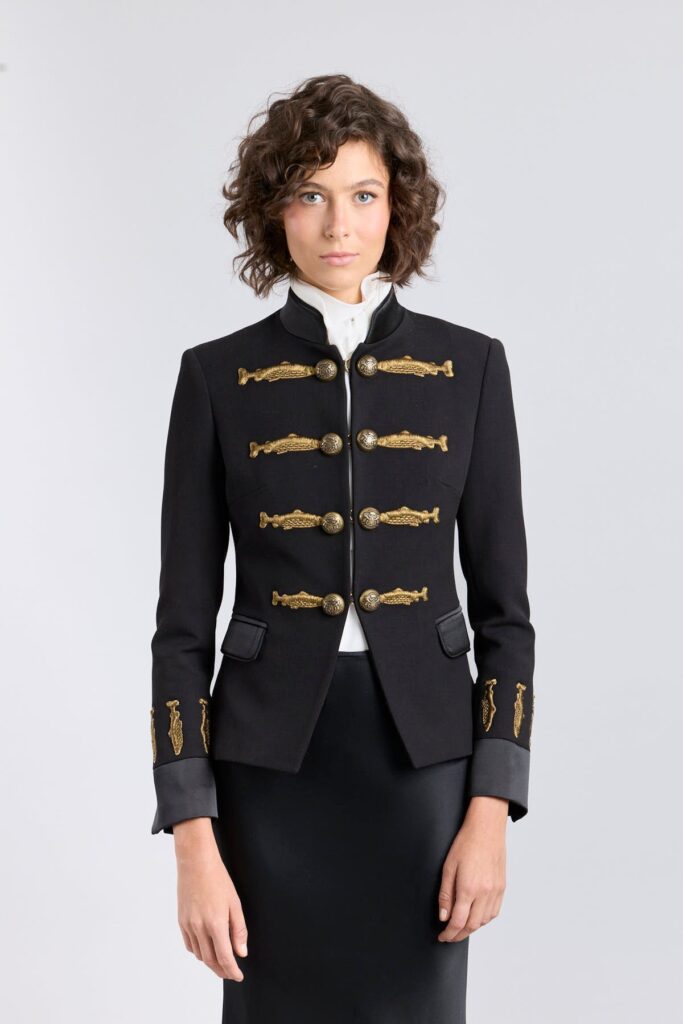
In women’s tailoring, the blazer has evolved into something far more varied and expressive than its naval and sporting origins suggest. Today it spans everything from a clean navy linen piece to a sculptural military silhouette with ornamental buttons. The underlying logic stays the same: a jacket that defines rather than follows.
A blazer is a specific type of structured jacket that stands independently of a matching bottom. It is more formal than a sport coat and more versatile than a suit jacket. The word jacket describes the broader category. A blazer is a defined style within it, built around structured construction, lapels, and the capacity to anchor an outfit across a wide range of professional and social contexts.
What Is a Sport Coat?
A sport coat is a casual jacket with origins in outdoor pursuits: shooting, riding, and country activities that demanded durable construction and freedom of movement. Men wore it in the nineteenth century. It has never fully shed that heritage.
Heavier fabrics define the sport coat: tweed, corduroy, hopsack. Its construction prioritizes durability and comfort over precision tailoring. The shoulder sits with more ease than a blazer. The silhouette relaxes. The detailing leans practical: patch pockets, elbow patches, fabrics with visible texture and weight.
For women, the sport coat occupies a narrow register. It performs well in relaxed professional environments, creative industries, and casual weekend contexts. The goal there is looking considered without the formality a blazer brings. Client-facing situations, high-stakes meetings, and occasions where authority matters in the conventional sense: the sport coat does not travel well into those rooms.
Choose a sport coat when the situation calls for relaxed intelligence rather than polished authority. Outside that register, the blazer performs better.
A sport coat is a casual structured jacket built from heavier fabrics like tweed or corduroy. For women, it works in creative or relaxed professional environments and casual social settings. It does not suit formal professional contexts, client-facing situations, or occasions that require polished authority. In most of those situations, a blazer serves the purpose more effectively.
What Is a Suit Jacket?
A suit jacket forms the upper half of a matched suit. Designers construct it specifically to pair with a coordinating trouser or skirt in the same fabric, cut, and color. Wearing a suit jacket without its matching bottom reads as incomplete to anyone who knows what they are looking at.
The suit jacket occupies the formal end of the structured jacket spectrum. Precise construction, a disciplined silhouette, fabric chosen to match the bottom exactly: these qualities constrain the garment’s creative flexibility but produce the most formally coherent outcome of the three.
For women in professional environments, the suit jacket with a matching trouser or skirt remains the clearest signal of formal authority. Court appearances, executive presentations, formal interviews at the highest level, contexts where business professional rather than business casual sets the standard: the suit jacket belongs there.
Outside those specific contexts, the suit jacket’s constraint becomes its limitation. It cannot move between registers the way a blazer can. It is either fully deployed or out of place.
Technically yes, but it reads as incomplete to a trained eye. A suit jacket pairs specifically with a matching bottom. Wearing it without that bottom risks looking like half a suit rather than a deliberate choice. A blazer is the better option when a structured jacket is needed without the formality of a complete suit.
Sport Coat vs Blazer: The Practical Differences for Women
The clearest way to understand the difference between a sport coat and a blazer is through construction and context rather than appearance. They can look superficially similar in photographs. They behave differently and communicate different things when worn.
A blazer builds for precision. The shoulder is defined and structured. The front works equally well buttoned or open. Designers choose the fabric for how it reads: its drape, its surface, the way it holds a silhouette under pressure. These garments perform in rooms where performance matters.
A sport coat builds for comfort and durability. The shoulder sits softer. The construction is less exacting. The fabric earns its place through texture and resilience rather than refinement. These garments suit contexts where looking good is enough and looking authoritative is not the primary requirement.
For a woman building a wardrobe with serious professional ambitions, this distinction matters. The blazer covers a far wider range of situations: from business casual to the upper end of professional, while remaining viable in social and evening contexts as well. The sport coat covers a narrower band and does not travel upward in register.
Why the Blazer Is the Superior Investment for Women
The case for investing in blazers over sport coats comes down to range, versatility, and what each garment communicates about its wearer.
A well-chosen blazer covers the full spectrum of business casual dressing, the most common professional dress code women navigate today. Our editorial on what business casual means for women explores this in depth. Beyond the office, the blazer moves to evening occasions, professional events, and social settings where a sport coat would feel out of register entirely.
A sport coat works in casual and relaxed environments. It does not translate convincingly to formal professional contexts. Its range is narrower and its upward mobility limited. For most women’s wardrobes, a well-chosen blazer does everything a sport coat does and significantly more.
Longevity reinforces the investment argument. A blazer made to a high standard, structured correctly and finished properly in a fabric that holds its shape, performs across seasons and years without expiring with trend cycles. The sport coat, being more casual in construction, tends to date more quickly as its textures and patterns move in and out of fashion.
Our editorial on why every wardrobe needs a statement blazer makes the full case for the blazer as a foundational investment rather than a seasonal purchase.
For most women’s wardrobes, a blazer is the more versatile and higher-value investment. It covers a wider range of professional and social contexts, communicates authority more effectively in formal settings, and transitions between registers in a way that a sport coat cannot. A sport coat suits casual and relaxed creative environments, but the blazer outperforms it across the full range of occasions most professional women navigate.
The Military Blazer: Where Structure Becomes Authority
Within the blazer category, the military silhouette represents the most authoritative expression of structured tailoring for women. A standard blazer communicates professionalism and polish. A military blazer communicates something more precise: command.
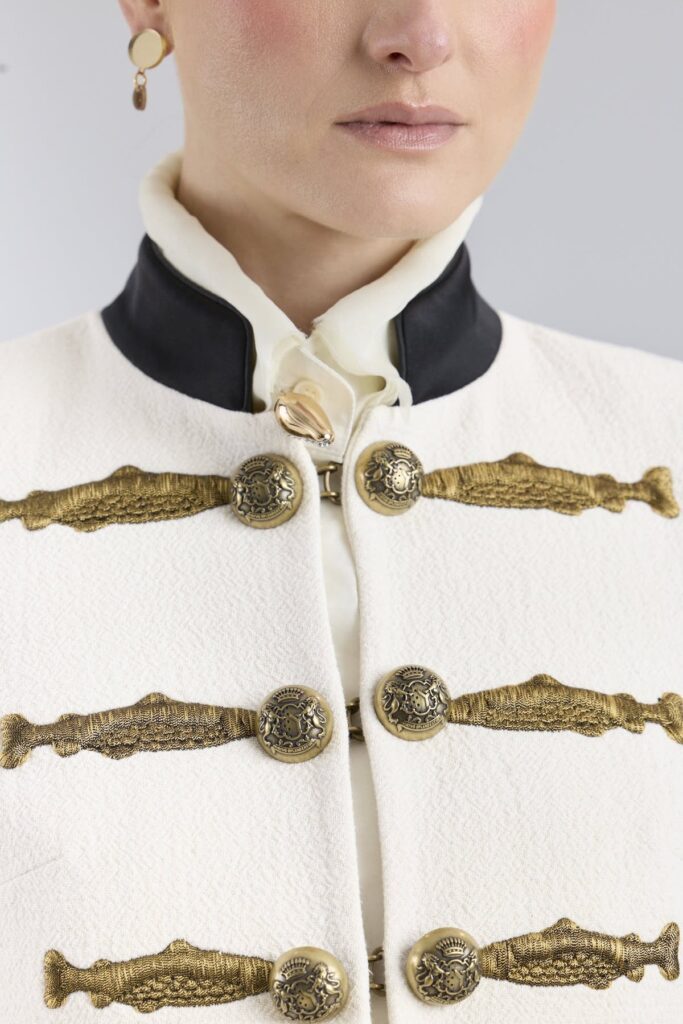
The defined shoulder, the symmetrical front closure, the precision button placement, the mandarin or stand collar: none of these elements are decorative in origin. They come from garments designed to signal rank and discipline. That weight carries into contemporary tailoring even when the context is entirely civilian.
For a woman who needs to occupy a room with authority — a keynote, a board meeting, a significant client engagement — the military blazer is the most direct answer in the blazer category. It does not ask to be taken seriously. It assumes it will be.
The full analysis of the military blazer’s construction, heritage, and contemporary relevance for women lives in our editorial on military blazers for women: structure, purpose and modern refinement. The full military blazers collection spans a range of silhouettes, colors, and fabrics, each built on the same structural logic.
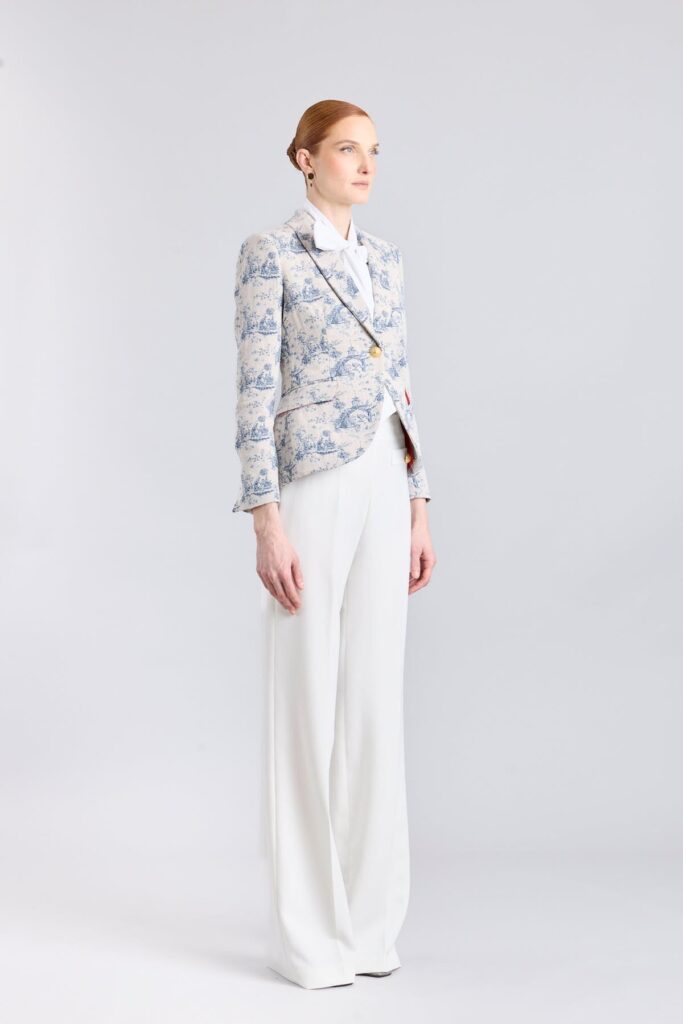
Choosing Between Them: A Practical Framework
The decision between a blazer and a sport coat comes down to what the occasion requires and what the garment needs to communicate on your behalf.
In professional contexts, the blazer is almost always the right answer. It handles the full range of business casual environments. It moves into business professional territory when the construction and fabric warrant it. It works in evening and social contexts without requiring a change of garment. A sport coat cannot do this.
In genuinely casual contexts — a creative studio, a relaxed weekend event, an environment where intentional informality sets the register — a sport coat in a distinctive texture or fabric earns its place. It signals that you understand the room well enough not to over-dress. In certain contexts, that is its own form of authority.
For most women building a wardrobe with professional requirements, the priority is clear: invest in blazers first and comprehensively. A sport coat, if it belongs in your wardrobe at all, is an addition to a collection of well-chosen blazers, not a substitute for them.
Our guide to choosing the perfect blazer for your body type and occasion covers the specific decisions in detail: silhouette, proportion, fabric, and how to match the garment to the full range of contexts you need to dress for.
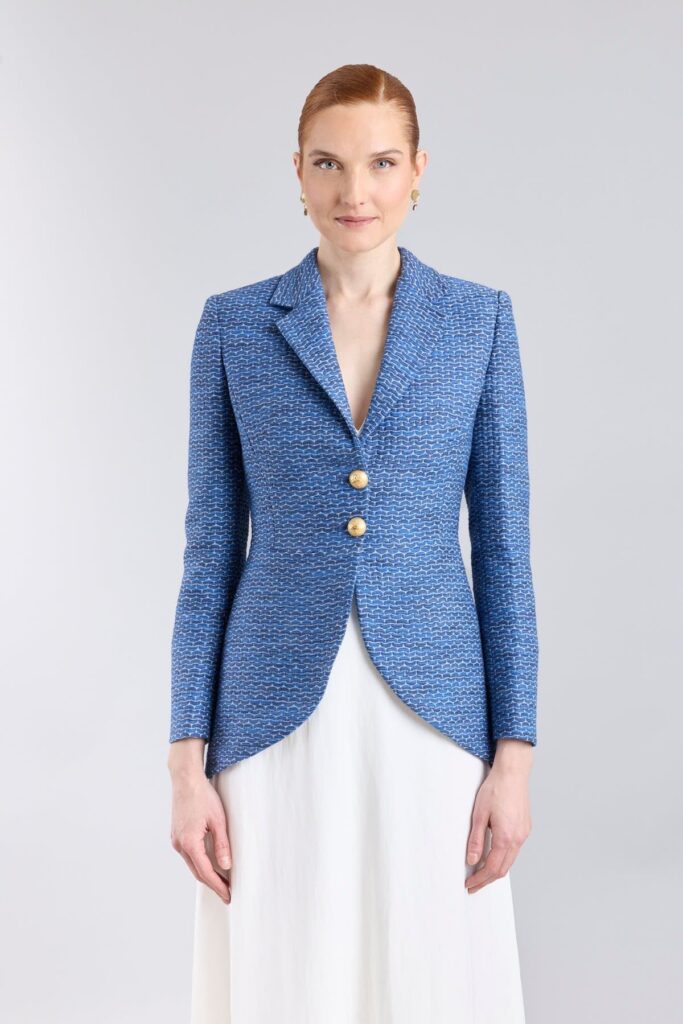
Two to three well-chosen blazers cover most requirements. One in a neutral tone handles formal professional contexts and doubles as business professional when needed. A second in a distinctive color or fabric covers occasions where personal expression is appropriate. A lighter-weight piece handles warmer months and more relaxed environments. Quality matters more than quantity.
Construction and Fabric: What to Look For
Understanding the difference between a sport coat and a blazer at the level of construction and fabric makes the distinction legible when you stand in front of a garment rather than read about it.
A blazer in the luxury tailoring tradition carries a structured front, a defined shoulder, and a lining that finishes the interior as carefully as the exterior. The fabric earns its place through how it moves, drapes, and holds its shape across a full day of wear. A well-made blazer does not require the wearer to manage it. It performs without assistance.
A sport coat typically uses heavier, more textured fabrics: tweed, herringbone, corduroy, or wool blends with visible surface interest. The construction is less precise. The shoulder sits softer. The silhouette relaxes. These are design decisions rather than quality failures. The sport coat builds for a different purpose and succeeds through different means.
The tell, when examining an unfamiliar garment, is the shoulder and the front. A blazer shoulder sits precisely at the seam and holds its line. A sport coat shoulder carries more ease, more softness, more room. When a blazer buttons, it creates a clean, unbroken vertical. A sport coat front is more relaxed and does not pursue the same precision.
Every piece in The Extreme Collection USA comes from Spain, finished by hand in limited quantities, built to the standard the blazer has always demanded. The construction is not decorative. It is structural. That is what separates a blazer that performs from one that merely resembles the silhouette.
The full collection of blazers for women is available at The Extreme Collection USA, each piece made in Spain and built to outperform every context it enters.