
Business casual is one of the most common dress codes in professional life and one of the least well-defined. It sits between the formality of a suit and the freedom of casual dressing, which sounds simple enough until you are standing in front of your wardrobe trying to decide what that actually means for a specific occasion, industry, or room.
The confusion is understandable. Business casual means different things in a law firm, a creative agency, a tech company, and a client lunch. What remains consistent across all of them is the underlying principle: you are there to be taken seriously, and your clothing is part of how that happens. The question is not what the rules are. The question is what communicates the right thing in this specific context.
A well-chosen blazer answers that question more reliably than almost any other garment. It introduces structure without formality, authority without rigidity, and polish without effort. Explore the full range of blazers for women at The Extreme Collection USA.
What Business Casual Actually Means
The term was popularized in the 1990s as workplaces began relaxing the expectation of formal suiting. It described a middle register: professional enough for the office, relaxed enough to feel human. The problem is that this middle register has never been precisely defined, and it has shifted significantly across industries and cultures in the decades since.
In finance and law, business casual still implies tailored trousers, structured tops, and closed-toe shoes. In creative industries, it might extend to dark denim and a blazer. In technology, it can mean almost anything that is not athletic wear. The dress code description rarely tells you enough. The industry, the company, and the specific occasion tell you much more.
What is consistent across every interpretation of business casual is the expectation that clothing communicates intentionality. The gym, a night out, a weekend: none of those contexts apply here. Professional dressing means the garments you choose should reflect where you are without requiring you to explain them.
Business casual for women means professional dressing that sits between formal suiting and casual clothing. It typically includes structured blazers, tailored trousers, refined blouses, and closed-toe shoes. The exact interpretation varies by industry and company, but the consistent principle is that clothing should communicate professionalism and intentionality without requiring full formal suiting.
Why the Blazer Is the Defining Business Casual Piece
Every dress code has a garment that anchors it. For business casual, that garment is the blazer. It is the piece that makes everything else work: the jeans become office-appropriate, the dress becomes professional, the simple shirt becomes polished. Remove the blazer and the outfit often falls below the threshold. Add it back and the question of whether you are dressed correctly stops being a question.
This is not simply about convention. A well-structured blazer physically changes the silhouette. Defined shoulders create presence, the structured front generates verticality, and the precision of the lapel and closure directs attention in a way that softer garments cannot. These are architectural effects, and they communicate authority before a word is spoken.
For a business casual context specifically, the blazer achieves something that no other garment manages with the same reliability: it makes the degree of formality of the outfit adjustable. The same blazer worn over tailored trousers reads as professional. Worn over dark jeans it reads as smart casual. Worn over a dress it reads as polished and considered. The blazer is the variable that controls how the whole outfit lands.
Business Casual Across Different Settings
The same dress code description covers a significant range of professional contexts, and dressing well within it means understanding which part of that range applies to a specific situation.
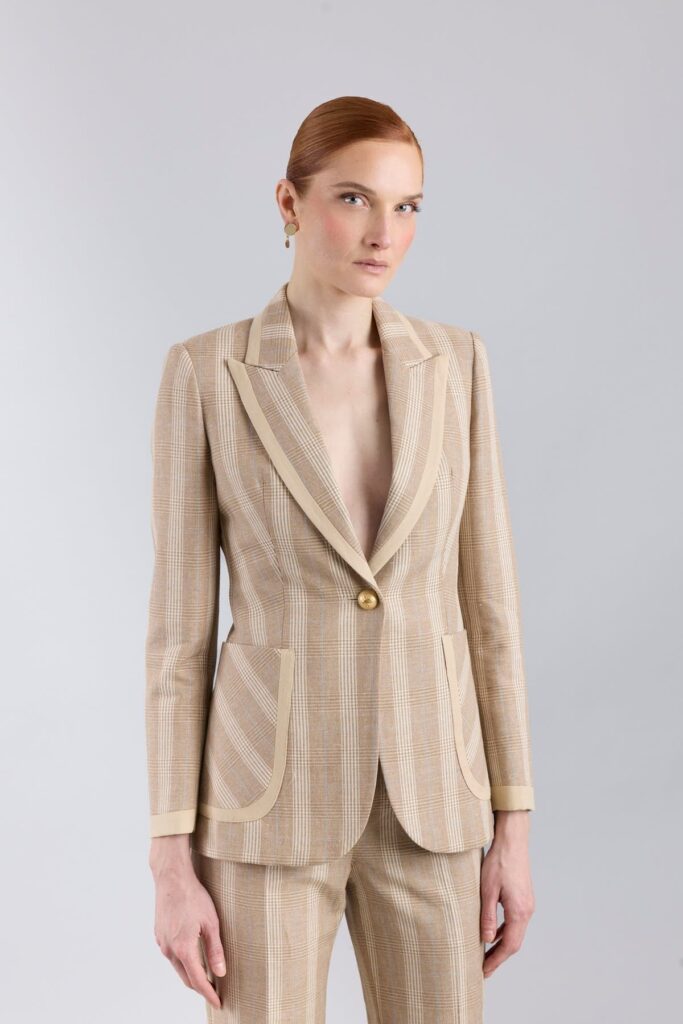
In an office environment, business casual means looking considered every day, not just for specific meetings. The goal is not to stand out but to read as someone who takes the context seriously. Structured tailoring in neutral tones, a well-chosen blazer over a refined blouse or fitted top, and closed-toe shoes in leather or a refined material: these form the reliable core of a business casual office wardrobe that works across five days without requiring significant thought each morning.
For client-facing situations, presentations, or formal meetings within a business casual environment, the register moves upward slightly. This is where the quality of construction becomes visible and relevant. A blazer that holds its shoulder line through a full day, that does not lose its shape under pressure, that reads clearly as a considered choice rather than a grabbed-off-the-rack option: this is what elevates a business casual outfit from adequate to authoritative.
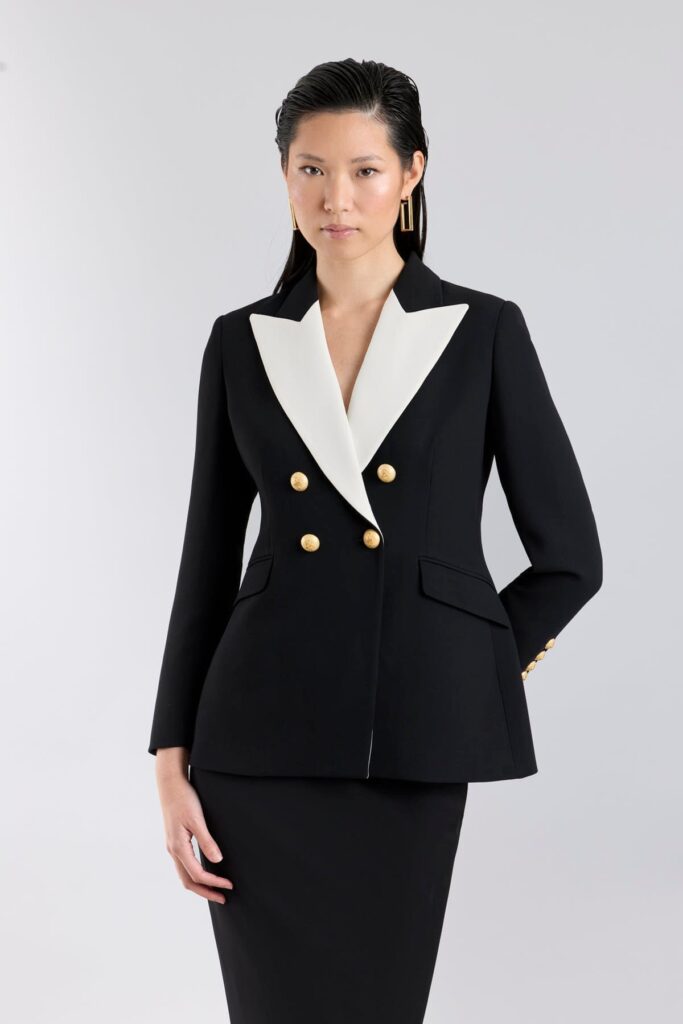
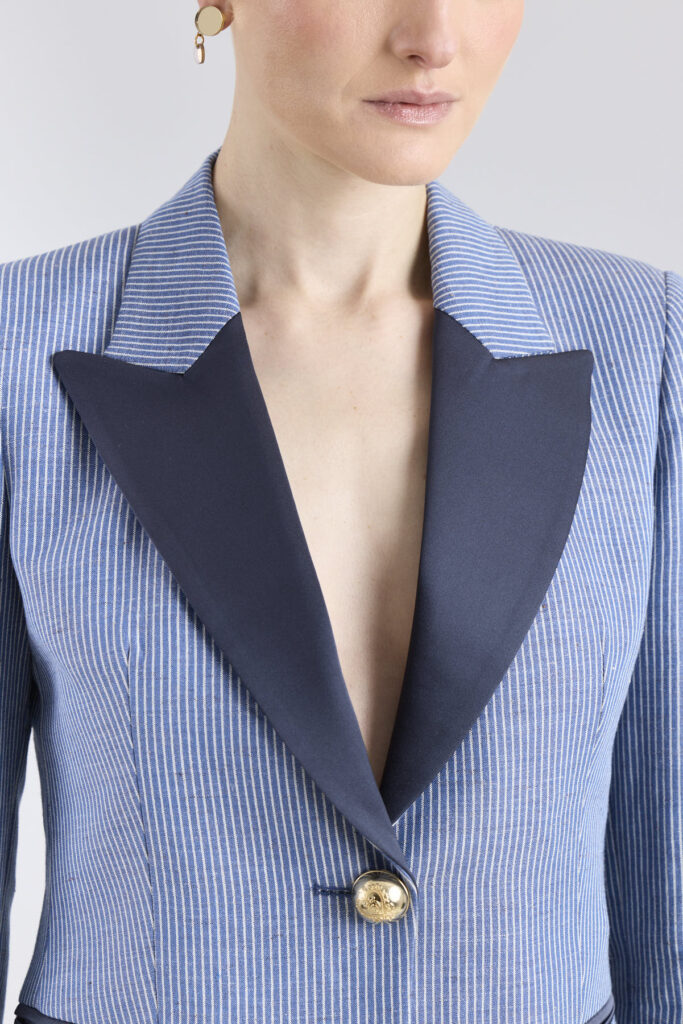
The military blazer operates particularly well in professional contexts where presence matters. Its structured shoulder, defined collar, and precision button detailing communicate authority in a way that standard professional tailoring does not. Our editorial on military blazers for women: structure, purpose and modern refinement covers why this silhouette has endured in professional dressing. The full military blazers collection offers a range of interpretations across colors and fabrics.
Yes. A blazer is one of the most reliably business casual garments available. It introduces structure and professionalism to any outfit while remaining flexible enough to work across the full range of business casual contexts, from daily office wear to client meetings to professional events. The quality and construction of the blazer determine how far up the professional register it reads.
What to Wear With a Blazer for Business Casual
A blazer resolves the outer layer. What sits beneath it is a simpler decision, governed by one principle: let the blazer lead. The garments underneath should not compete with it for attention. They should support the overall register without introducing complexity that the outfit does not need.
Tailored trousers in a neutral tone extend the vertical line of a structured blazer and reinforce the professional register throughout. They are the most consistent pairing across every business casual context. Dark denim in a clean cut, with no distressing, works in environments where the dress code leans casual, but it requires a more structured blazer to carry the weight of the professional context.
A fitted blouse, a simple shirt, or a fine-knit turtleneck all work as foundations beneath a blazer. The goal is a clean, resolved base that allows the blazer to function as the decision, not as a layer on top of another statement. Bold prints beneath a distinctive blazer, heavy jewelry alongside a strong silhouette, or a second expressive piece competing in the same outfit: these combinations always dilute the effect.
For a complete guide to how blazer silhouettes interact with body type and proportion, our post on how to choose the perfect blazer for your body type and occasion covers the decisions in detail.
Business Casual vs Business Professional
The distinction matters because the two dress codes communicate different things and require different garments to execute correctly.
Business professional means a suit or its equivalent: a matched jacket and trouser or skirt in a formal fabric, typically in black, navy, or grey. It is the dress code for courtrooms, formal financial environments, executive presentations, and any context where the stakes of the impression are high enough to require complete formality. There is very little interpretive room.
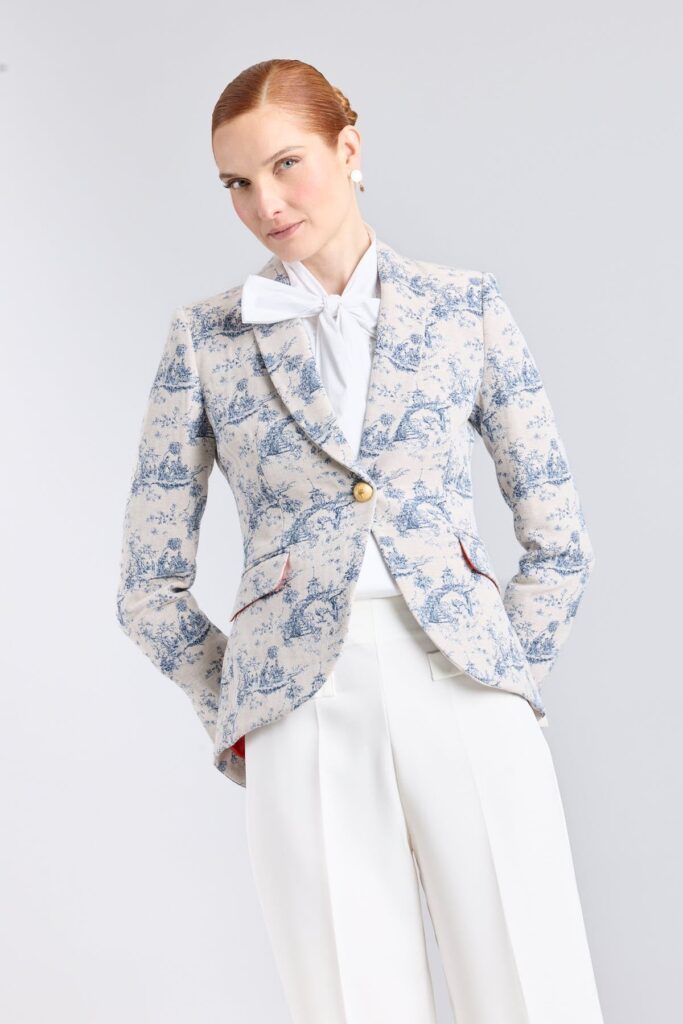
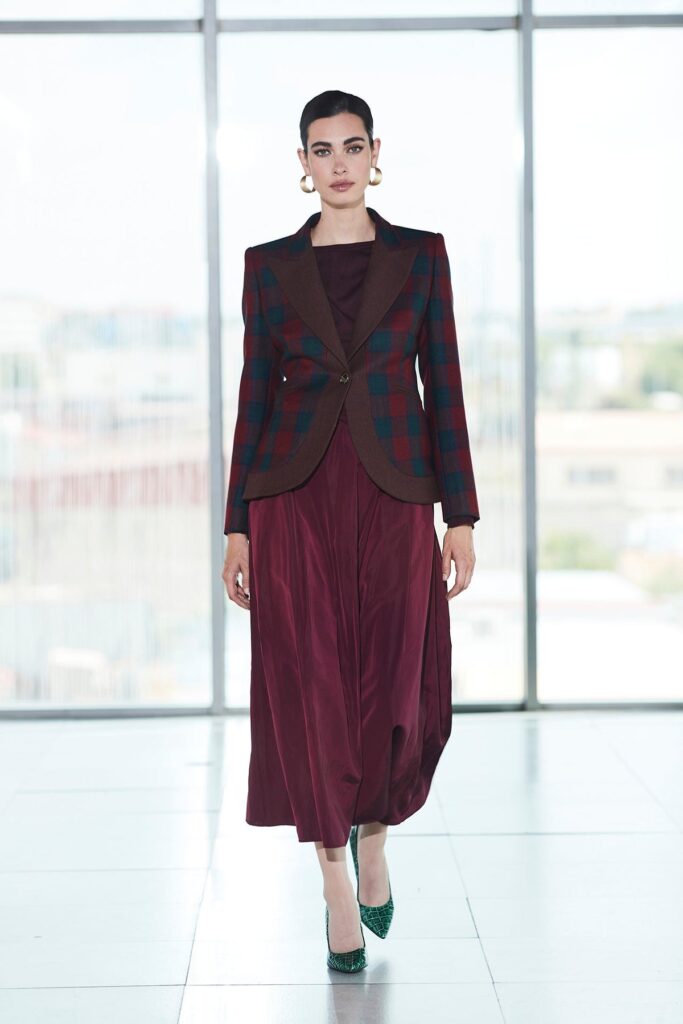
Business casual, by contrast, is built on interpretive room. It allows for color, for individual pieces rather than matched sets, for fabrics that are not strictly formal, and for a degree of personal expression that business professional does not. The constraint is not formality. The constraint is professionalism, which is a different and ultimately more flexible requirement.
A structured blazer in a bold color, for example, is not business professional. It is business casual done with confidence. The same blazer in a military cut with ornamental buttons sits at the upper end of business casual and would not be out of place in most business professional environments either. The quality of the garment determines how far up the register it can travel.
Business professional requires a suit or matched formal jacket and trouser set, typically in conservative colors with minimal interpretive room. Business casual allows individual pieces, a wider range of colors and fabrics, and more personal expression, within the constraint that the overall outfit still reads as professional. A structured blazer is the garment that most effectively bridges both dress codes.
Business Casual for Specific Occasions
Business casual covers a range of professional occasions that each carry their own specific requirements. Understanding the nuance between them is what separates dressing correctly from dressing well.
A job interview in a business casual environment calls for the upper end of the register. The goal is to communicate that you understand the context and took it seriously enough to dress for it deliberately. A structured blazer over tailored trousers, in a neutral or refined tone, achieves this without over-dressing. Avoid anything that requires explanation or that could read as a statement about your personal taste rather than your professional judgment.
A company event, an industry dinner, or a professional reception moves the register slightly in a different direction. The professional context is still present, but the setting allows for more individual expression. This is where color, texture, and distinctive tailoring earn their place. The blazer remains the anchor. What changes is which blazer.
For a full guide to navigating the specific requirements of professional events, our editorial on what to wear to a work event covers the daytime, evening, and high-stakes registers in detail. The styling logic that applies to military blazers across professional contexts is explored in our post on how to style a military blazer for modern wardrobes.
Building a Business Casual Wardrobe Around a Blazer
A business casual wardrobe does not require a large number of pieces. It requires the right pieces, chosen with enough intention that they work together consistently and cover the range of professional contexts the wearer navigates regularly.
Two or three well-chosen blazers cover most of the range. One in navy or black handles the formal end of business casual and doubles as business professional when needed. For occasions where personal expression is appropriate, a blazer in a refined color or distinctive fabric earns its place. Warmer months and more relaxed professional environments call for something in linen or a lighter-weight construction.
The pieces that sit beneath them — tailored trousers, refined blouses, fitted knits — are secondary decisions. Their job is to resolve the outfit around the blazer, not to introduce complexity that the blazer then has to manage. The investment in quality goes into the blazer. Everything else follows from it.
Every piece in The Extreme Collection USA is made in Spain, crafted by hand in limited quantities to a standard that is visible in how the garment performs across a full professional day. The shoulder holds. The shape does not drift. The construction communicates what it is meant to communicate, which is exactly the point of dressing well for work.
Two to three well-chosen blazers cover most business casual requirements. One in navy or black handles formal professional contexts, doubling as business professional when needed. For occasions where individual expression is appropriate, a blazer in a distinctive color or fabric earns its place. Warmer months and more relaxed environments call for something in linen or a softer construction. Quality matters more than quantity. Quality matters more than quantity.
The full collection of blazers for women and military blazers is available at The Extreme Collection USA, each piece made in Spain and built to perform across the full range of professional occasions.