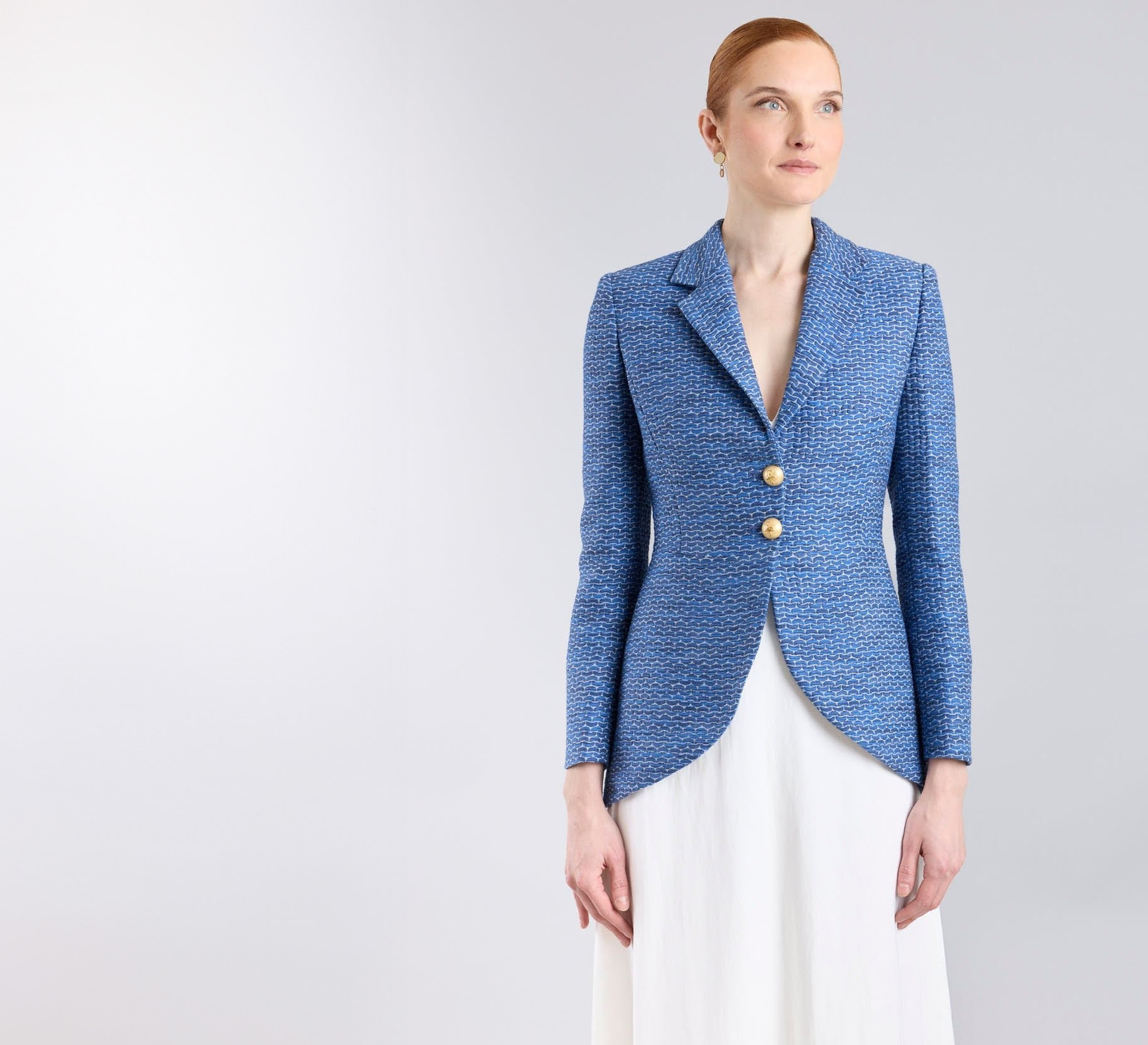
Wearing a blazer over a dress is one of the most effective combinations in a woman’s wardrobe and one of the least understood. The instinct is to treat the dress as the statement and the blazer as an addition to it. The logic works better in reverse. When the blazer leads and the dress supports it, the combination produces something neither garment achieves alone: the authority of structured tailoring with the ease and femininity of a dress beneath it.
The result is an outfit that reads as both considered and effortless. The blazer provides the architecture. The dress provides the contrast. Together they cover a wider range of occasions than either piece could manage independently. Explore the full range of blazers for women at The Extreme Collection USA.
Why the Combination Works
The blazer and dress combination works because it creates productive tension between two opposing principles. A blazer is structured, angular, and precise. A dress is fluid, curved, and soft. When these two registers appear in the same outfit, each one makes the other more visible. The blazer’s structure reads more clearly against the dress’s fluidity. The dress’s femininity reads more clearly against the blazer’s architecture.
This is why the combination reads as more sophisticated than either piece worn alone. A blazer with trousers produces authority. A dress worn alone produces femininity. A blazer over a dress produces both simultaneously, which is a more interesting and more versatile result than either standalone option.
The practical benefit is equally significant. The blazer introduces the professional or smart casual register to an outfit that might otherwise read as too casual or too social for certain contexts. A floral dress that belongs at a weekend lunch becomes appropriate for a relaxed professional event when a structured blazer sits over it. The blazer does not diminish the dress. It contextualizes it.
Yes. A blazer over a dress is one of the most versatile outfit combinations available to women. The blazer provides structure and professional authority while the dress introduces ease and femininity. The combination works across a wide range of occasions from professional environments to smart casual events to evening occasions, depending on the specific blazer and dress chosen.
Choosing the Right Blazer
The blazer is the decision in this combination. The dress is secondary. Choosing the blazer first, and then finding a dress that supports it, produces a more consistently successful result than building outward from the dress and adding a blazer as an afterthought.
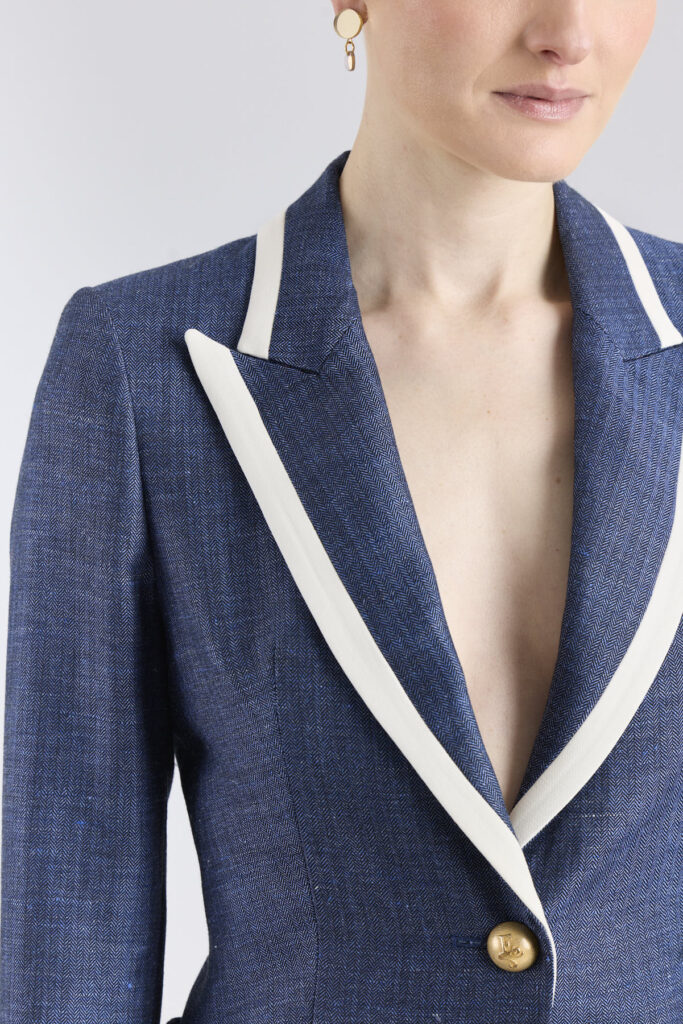
For professional and smart casual contexts, a structured blazer in a neutral or refined tone is the most reliable starting point. It introduces authority without over-determining the outfit and works with the widest range of dress silhouettes and colors beneath it. The blazer below is a strong example: a tailored navy silhouette with white piping that reads as precise and considered across every context it enters.
For occasions where more personality is appropriate, a blazer in a distinctive color or fabric makes the combination more expressive without losing the structural logic that makes it work. The dress beneath recedes further when the blazer carries more visual weight. A simpler, darker, or more neutral dress beneath a distinctive blazer keeps the blazer as the clear focal point of the outfit.
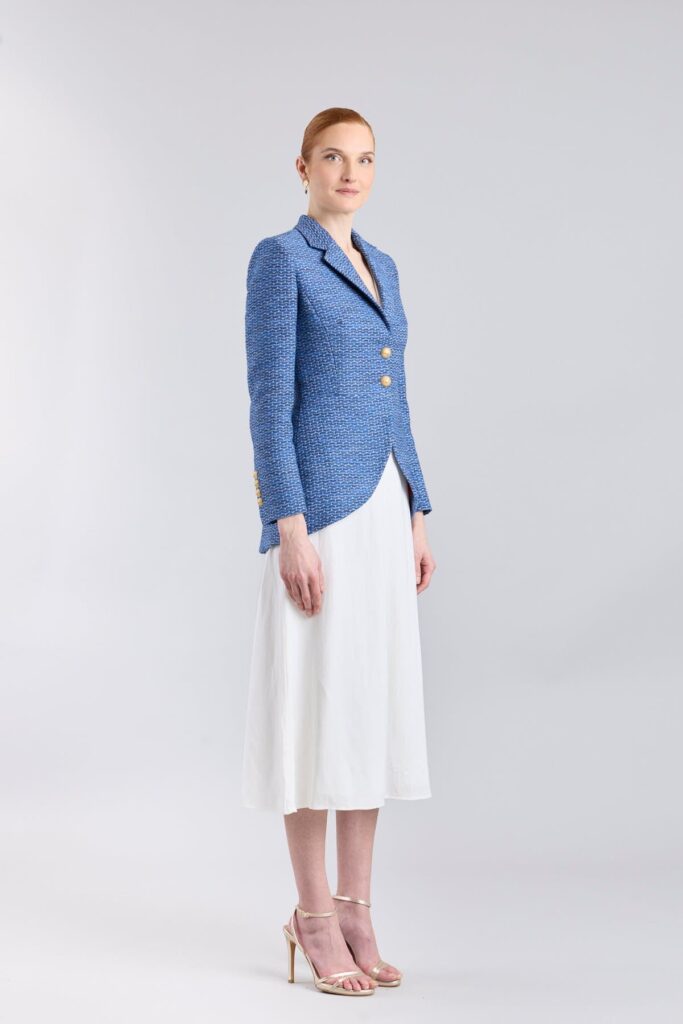
The blazer below illustrates this: a rich royal blue with a clean lapel and the kind of color confidence that allows a simple dark dress beneath it to disappear in favor of the jacket’s presence.
Choosing the Right Dress
The dress beneath a blazer has one primary job: to not compete with the jacket above it. This does not mean the dress must be plain or forgettable. It means the dress should work with the blazer rather than against it, providing contrast and ease without introducing a second visual statement that divides the outfit’s attention.
In terms of silhouette, fitted and A-line dresses work best under a blazer. A fitted dress creates a clean vertical line that the blazer’s structure complements directly. An A-line dress provides enough volume beneath the blazer’s hem to create movement without adding bulk at the shoulder. Both allow the blazer to sit cleanly without the fabric beneath it pulling or bunching.
Avoid very full or voluminous dresses beneath a structured blazer. The bulk creates an unflattering silhouette at the waist and hips, and the visual competition between the blazer’s structure and the dress’s volume produces an unresolved result. Keep the dress lean and the blazer will do the rest.
In terms of length, a dress that falls below the blazer’s hem by several inches reads as the most intentional combination. A dress that ends at roughly the same length as the blazer can work but requires careful attention to proportion. A dress significantly longer than the blazer creates a dramatic effect that reads well at evening events and less well in professional or daytime contexts.
Fitted and A-line dresses work best under a structured blazer. A fitted dress creates a clean vertical line that complements the blazer’s structure. An A-line dress provides movement beneath the blazer’s hem without adding bulk. Avoid voluminous or full-skirted dresses, which create an unflattering silhouette at the waist and compete visually with the blazer’s structure. In terms of color, darker and more neutral dresses allow a distinctive blazer to read as the focal point of the combination.
The Military Blazer Over a Dress
The military blazer creates the strongest version of the blazer-dress contrast because its architecture is the most defined. The structured shoulder, the symmetrical front, the precision of the collar and button placement: these elements read with particular clarity against the fluidity of a dress beneath them. The contrast between the military blazer’s discipline and the dress’s movement is more pronounced than with any other blazer type.
For a professional context, a military blazer over a simple dark dress produces the most authoritative version of the combination. The blazer communicates command. The dress introduces ease. The overall impression is of a woman who dresses with intention across every register she enters.
For a social or evening context, the same logic applies with a different result. A military blazer in a warm or distinctive tone over a simple dress reads as confident and considered in a way that a standard blazer does not quite achieve. The military silhouette carries enough visual authority that the dress beneath it does not need to do much work beyond providing the right contrast.
The jacket below is the military silhouette at its most precise: a navy crepe construction with mandarin collar and a button row that creates the vertical line the combination requires. Over a simple fitted dress it communicates authority and ease simultaneously.
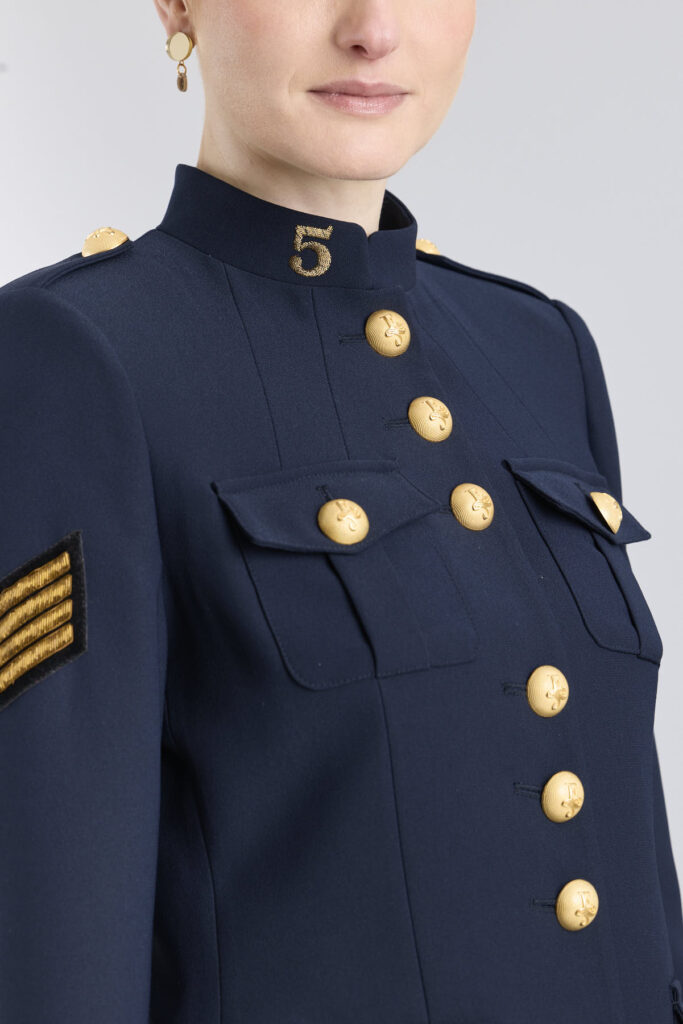
The jacket below takes the military silhouette in a more expressive direction: deep navy with the kind of refined detailing that transitions from a daytime professional context to an evening occasion without requiring a change of outfit.
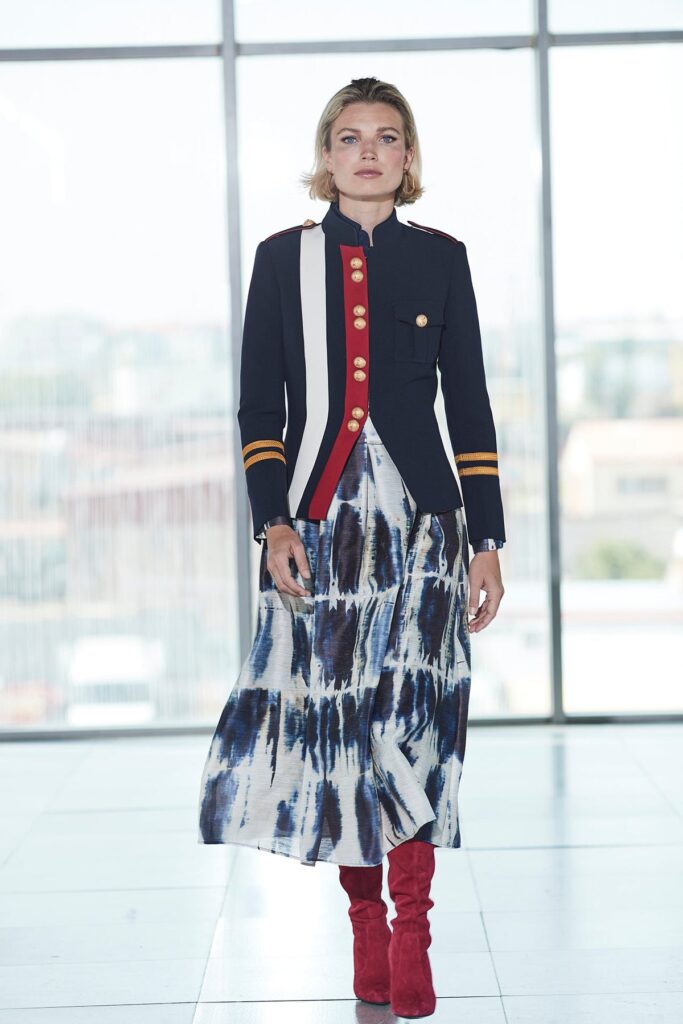
The full range of military blazers for women covers the complete spectrum of silhouettes suited to this combination.
For Professional Occasions
A blazer over a dress in a professional context works when the blazer is structured enough to carry the professional register on its own. The dress provides the foundation. The blazer provides the authority. The combination reads as more considered than a blazer with trousers in many contexts because the contrast between the structured jacket and the softer garment beneath it communicates a level of confidence that matched tailoring does not.
Choose a blazer in a neutral or refined tone for professional occasions. Navy, black, and deep cocoa all work. Keep the dress simple, dark, and fitted. The footwear should reinforce the professional register: a clean heel or a structured flat, nothing that introduces a casual note that the blazer would then have to overcome.
Our post on what to wear to a work event covers the full range of professional occasions and how the blazer performs across them.
For Smart Casual and Social Occasions
Smart casual occasions are where the blazer-dress combination performs most freely. The register permits more personality in the blazer and more variety in the dress beneath it. A printed blazer over a simple dress reads as expressive and considered. A distinctive fabric or color in the blazer communicates taste without requiring the dress to carry any of that weight.
For weekend occasions, a more relaxed blazer over a fluid dress strikes the right balance. The blazer provides enough structure to keep the combination from reading as too casual while the dress’s movement prevents the outfit from feeling overly formal for a social setting.
The jacket below works across both registers. A white structured knit with bold black contrast detailing that reads as confident and considered in any smart casual setting. The contrast between the jacket’s architecture and the dark fluid garment beneath it illustrates the combination at its most effective: the structure leads, the softness follows.
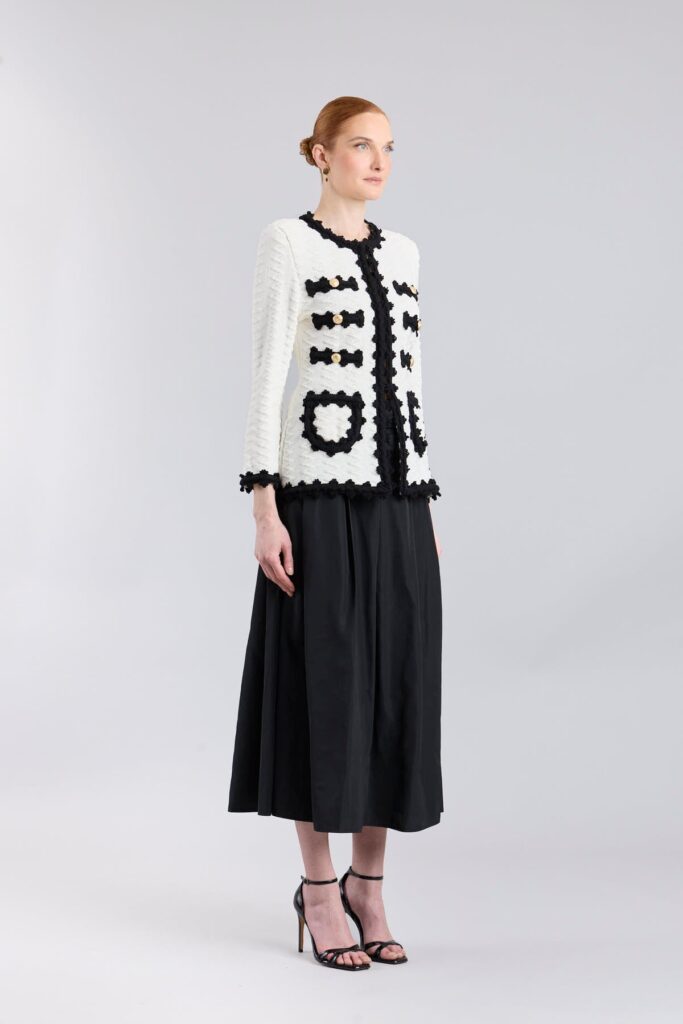
Yes. A structured blazer over a fitted dress is appropriate for most professional environments, including business casual and smart casual contexts. The blazer carries the professional register on its own, while the dress provides the foundation beneath it. Choose a blazer in a neutral tone, keep the dress simple and dark, and ensure the footwear reinforces rather than undermines the professional register.
The Details That Make It Work
The blazer-dress combination succeeds or fails on a few specific details. Getting these right produces a combination that reads as entirely intentional. Missing any of them produces an outfit that looks as though the two pieces happened to be worn together rather than chosen for each other.
Proportion is the most important detail. The blazer’s hem length relative to the dress length determines whether the combination reads as balanced. A blazer that ends at the hip with a dress that falls to the knee or below creates a clean, proportional silhouette. A blazer that ends mid-thigh over a very short dress risks looking unbalanced. When in doubt, err toward more dress length rather than less.
Color relationship is the second critical detail. The blazer and dress do not need to match, but they need to work together. Complementary tones, contrasting neutrals, or a bold blazer over a dark neutral dress are all reliable combinations. What does not work is two competing bold tones in the same outfit, one from the blazer, one from the dress, that each demand attention simultaneously.
Accessories should reinforce the blazer’s register rather than the dress’s. In a combination where the blazer leads, the accessories belong to the blazer’s vocabulary: precise, minimal, considered. Heavy or decorative accessories that align with the dress’s femininity can undermine the authority the blazer is working to establish.
The jacket below works across both registers. A vibrant red structured knit with geometric braided trim that reads as confident and considered in any smart casual setting. The color does the work without requiring anything else in the outfit to explain it. Pair it over a simple dark dress and the combination resolves itself immediately.
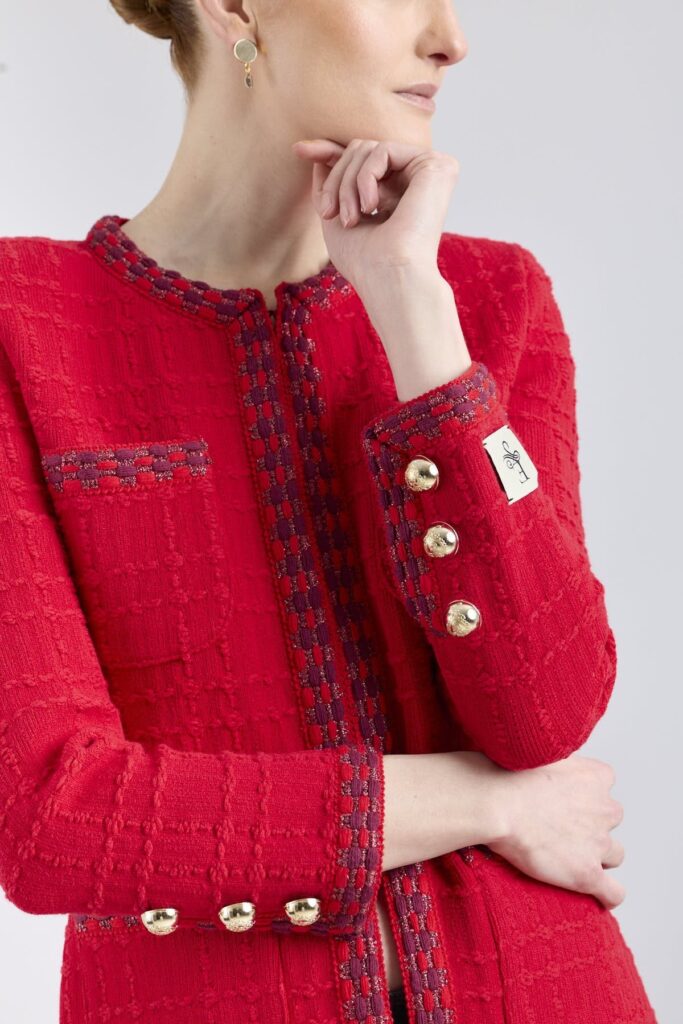
For further guidance on how blazer silhouettes interact with body type and proportion, our guide to choosing the perfect blazer for your body type and occasion covers the decisions in detail. The full collection of blazers for women and military blazers is available at The Extreme Collection USA, each piece made in Spain and built to anchor every combination it enters.