
At some point, most women learn to dress for the room. They learn what a job interview expects, what a client meeting requires, what a dinner party permits. They build a wardrobe around these requirements, adding and subtracting pieces based on what the next room is likely to need from them. The wardrobe becomes a response. A negotiation with other people’s expectations. A careful management of how much of themselves they are allowed to bring.
This is August, Women’s Equality Month. And the argument this month makes, the argument that women have been making for more than a century, is that negotiating yourself down to fit what the room expects is not the only option available. There is another way to dress. One that starts from who you are rather than from what the room is prepared to receive. Explore the full range of blazers for women at The Extreme Collection USA.
The Problem with Dressing for the Room
Dressing for the room is not always wrong. Understanding a context and choosing clothing that respects it is a form of social intelligence. The problem begins when dressing for the room becomes the only mode available: when the wardrobe contains nothing that was not chosen in response to an external requirement, when every piece was selected because it would be acceptable rather than because it says something true.
A wardrobe built entirely around what the room expects produces a woman who is always adequately dressed and rarely herself. She clears the bar consistently. She never sets it. The room receives her as competent and appropriate, which is exactly what she aimed for and exactly less than she is.
The cost of this is not always visible in the moment. But over time, a wardrobe built around compliance produces something more significant than a uninspiring collection of clothes. It produces a habit of self-reduction. Of asking what is expected before asking what is true. Of leading with the room’s comfort rather than her own clarity.
Dressing for yourself means choosing clothing that reflects something true about who you are rather than something that simply meets the expectations of the context. It does not mean ignoring the room or dressing inappropriately for an occasion. It means understanding the context well enough to respond to it on your own terms: choosing the piece that communicates something specific about you, rather than the piece that asks the least of the room and demands the least of yourself.
What Dressing for Yourself Actually Looks Like
Dressing for yourself is not dressing in opposition to the room. It is not wearing something inappropriate or deliberately confrontational. It is not a refusal to engage with context. It is something more precise and more powerful than any of those things.
It is choosing the piece that says something true about who you are within the constraints of the occasion. The business casual event that expects a blazer does not specify which blazer. The dinner that calls for smart casual does not specify which color, which fabric, which silhouette. Within every dress code there is space. The woman who dresses for herself finds that space and fills it with intention rather than compliance.
The difference is visible. A room full of women dressed for the room looks like a room full of women who understood the brief. A woman dressed for herself, within that same room, looks like she wrote it.
The blazer below is the piece that makes this difference most immediately legible: an ivory military silhouette with the kind of construction and surface quality that communicates a specific point of view rather than a general compliance. In any room that expected navy or black, this piece reads as a considered decision. That is dressing for yourself.

Color as an Act of Autonomy
Color is one of the clearest expressions of dressing for yourself rather than for the room. Most professional dress codes default to neutral: navy, black, grey, camel. These are safe choices. They do not offend, they do not distract, they do not declare anything beyond the wearer’s understanding of the convention. They are, in the most literal sense, dressing for the room.
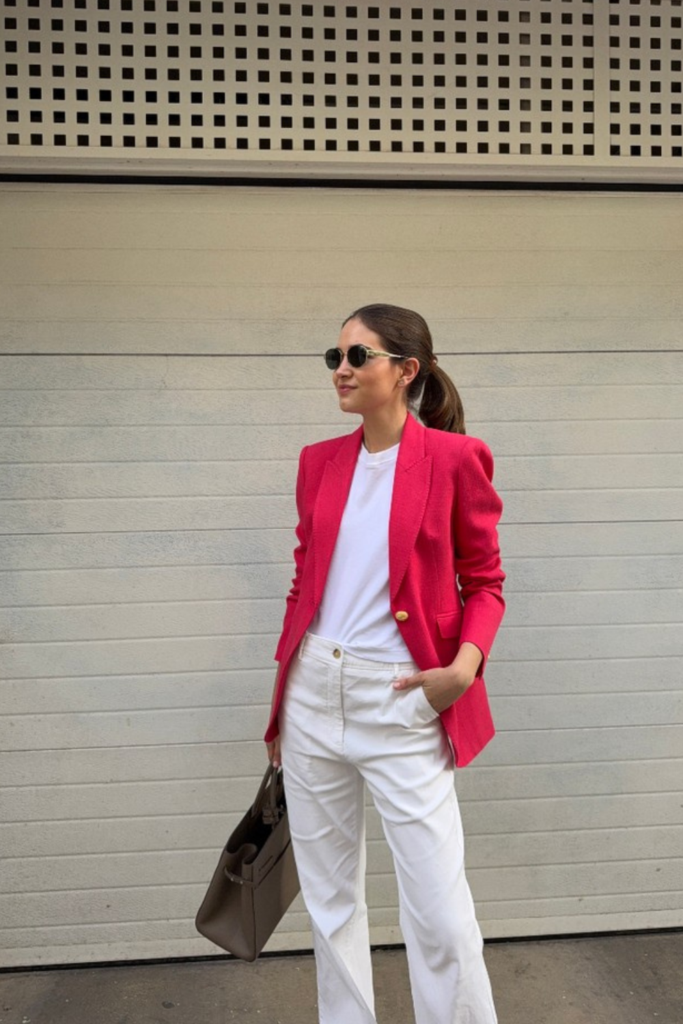
Choosing a bold color in a context that expects neutral is not a violation of the dress code. It is an assertion within it. A woman who arrives in a fuchsia blazer at a smart casual event has not misread the room. She has read it well enough to know she can bring more of herself into it than the room anticipated. The color does not diminish her professionalism. It adds a dimension that the neutral palette systematically suppresses.
This is what equality in dressing actually looks like in practice: not the removal of standards but the expansion of what is considered appropriate within them. The women who have been wearing bold color to professional and social contexts for decades have not been breaking rules. They have been expanding them.
The blazer below makes this case with complete conviction: a fuchsia linen construction that carries the professional structure of a tailored blazer while refusing to disappear into the neutral palette the room expected. It is not a statement about fashion. It is a statement about presence.
Start by identifying one thing your current wardrobe says about you that is true, and one thing it says that is simply compliant. Then choose one piece that replaces the compliant one with something more specific. Dressing with personality does not require a complete wardrobe overhaul. It requires one deliberate choice made in favor of what is true over what is safe. A bold color, a distinctive fabric, a silhouette that takes a clear position: any of these, chosen with intention, begins the shift from dressing for the room to dressing for yourself.
The Blazer That Refuses to Be Generic
There is a category of blazer that exists entirely to satisfy the room: a neutral single-breasted piece in a safe fabric that will not register as a choice at all. It is fine. It is appropriate. It is forgettable. The woman wearing it has dressed for the room and the room has received her accordingly.
Then there are blazers that refuse to be generic. Not because they are loud or inappropriate but because they were designed with a specific point of view. A distinctive print, an unusual color, an artisanal detail that signals that the piece was made by someone who had something to say: these blazers make a different argument. They say that the woman wearing them chose this specific piece for a specific reason, and that reason is worth noticing.
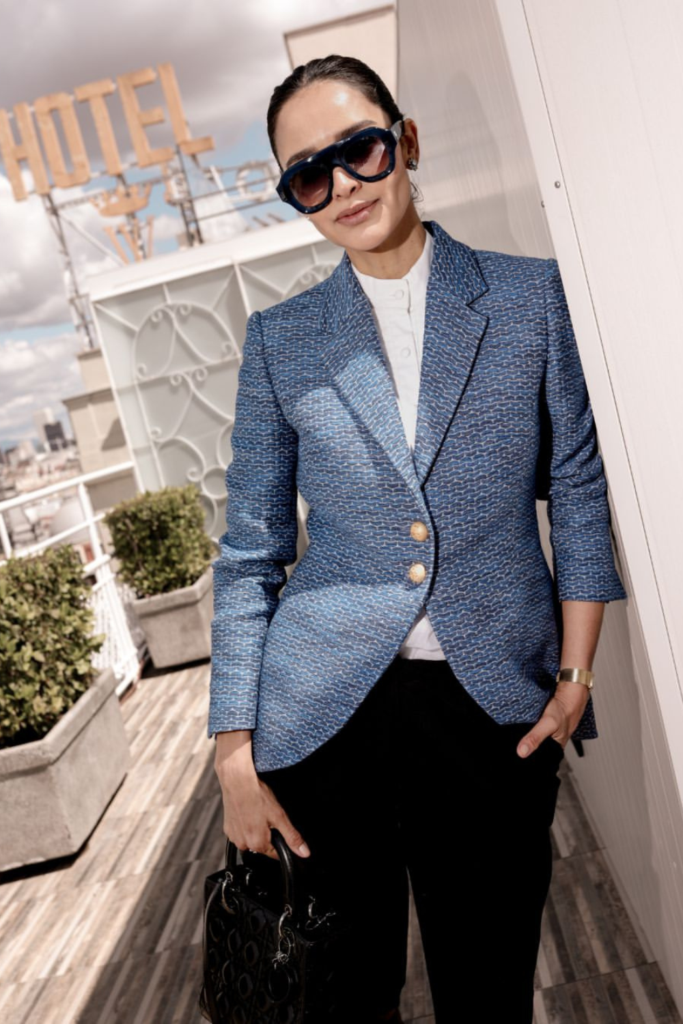
The blazer below belongs entirely to this second category: a royal blue construction with the color confidence of a piece that knows exactly where it stands. It does not ask permission to be in the room. It arrives with its point of view already established and the room adjusts accordingly.
On Dressing Beyond What Is Expected
Women’s Equality Month exists because the history of women in professional and public life is partly a history of being told what is appropriate: what to wear, how much space to take up, how much of themselves to bring into a room before the room becomes uncomfortable. The dress codes applied to women have always been more restrictive than those applied to men, more specific about what is permitted and what is excessive, more ready to penalize the woman who brings too much of herself into a professional context.
Dressing for yourself is a response to that history. Not a confrontational one. Not a rejection of all standards or a refusal to engage with context. It is the quieter and more sustained response: the daily decision to bring yourself into the room rather than the version of yourself the room prepared for. To choose the piece that says something true rather than something safe. To occupy the space that dressing with intention creates rather than the space that compliance permits.
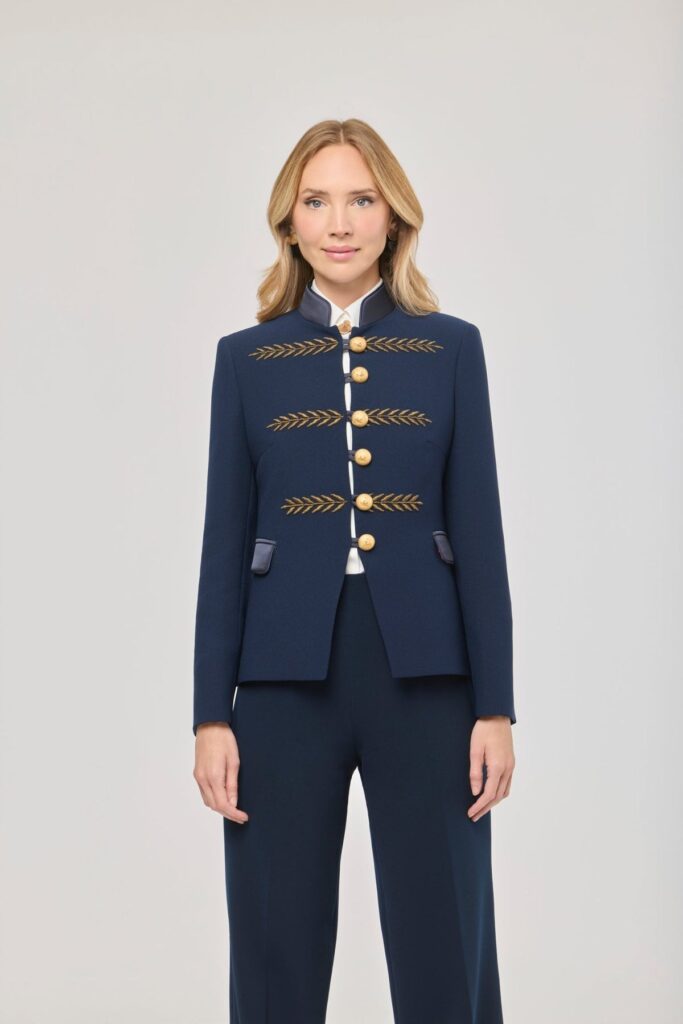
The blazer below makes this argument through the most understated possible means: a cropped navy military silhouette with gold thread embroidery that communicates a specific sensibility without announcing it. It is not trying to provoke the room. It is simply not trying to disappear into it.
Personal style is important because it is one of the most consistent and available forms of self-expression a woman controls entirely. The clothes she chooses communicate who she is before she speaks, shapes how rooms receive her, and reflects the degree to which she has decided to bring herself rather than a compliant version of herself into her daily life. A woman with a genuine personal style has made a series of decisions in favor of truth over safety. That accumulates into something the room cannot ignore.
Start with One Piece
Dressing for yourself does not require rebuilding a wardrobe from the beginning. It requires one piece chosen for a different reason than every other piece in the collection. One blazer that was not selected because it was appropriate but because it says something specific. One color that was not chosen because it was safe but because it is true. One deliberate choice made in favor of presence over compliance.
From that one piece, a different relationship with the wardrobe becomes possible. The room stops being the primary consideration. What is true about who you are starts to take its place. That shift does not happen all at once. But it begins with a single choice made differently.
The blazer below is the kind of piece that begins that shift: a structured jacket with enough personality to read as a deliberate choice in any room that expected something safer. It does not require an explanation. It simply requires the decision to wear it.

For the posts that sit alongside this one in TEC’s August editorial series, our post on why the first impression you make matters covers what clothing communicates before you speak. Our post on you already know who you are makes the case for the wardrobe that reflects it. The full collection of blazers for women and military blazers is available at The Extreme Collection USA, each piece made in Spain for the woman who has decided to stop dressing for the room.